
This guide helps homeowners who find planning a new kitchen exciting yet overwhelming. The cost for kitchen renovation varies widely, because home size, material choices, and the level of change all push the numbers up or down. Some people only refresh surfaces, while others rebuild the whole layout. I wrote this to help you plan with confidence and avoid unpleasant surprises in your budget.
Key Cost Drivers
Three factors shape the final figure: scope, kitchen size, and location. A simple update with new paint and fresh hardware costs far less than a complete gut remodel. Moving plumbing or gas lines adds money fast, so I always tell clients to keep the existing layout and save.
Average Price Ranges
Most projects fall into three groups. A minor refresh or other minor updates often cost a few thousand dollars, while mid range remodels usually land between 15,000 and 40,000 dollars. Major renovations and luxury projects climb higher. Treat these as estimates, because prices shift with your city, labor markets, and material markets, so collect local quotes.
Cabinets Take the Biggest Slice
Cabinets are the largest single expense, and they often eat a third of total budget. Stock cabinets stay affordable, semi-custom lines offer more sizes and finishes, and fully custom units cost the most. Solid wood looks rich, but laminate and engineered boards come at a lower price. I once chose refacing for a friend, and it gave the room a fresh look without a big bill.
Countertops and Backsplash Costs
Countertops take daily use, so pick surfaces wisely. Laminate is the cheapest choice, quartz and granite sit in the middle, and marble or specialty stone costs the most. A backsplash adds style with tiles over a small area. Ask installers to split supply prices and labor prices, since installation fees differ.
Appliances and Fixtures
Appliances can wreck a plan, so set a limit first. A basic package with a fridge, stove, dishwasher, and range hood costs much less than a premium suite. Energy-efficient models cost more upfront, yet they trim utility bills. Do not forget sinks and faucets; these fixtures reward quality, so compare prices across brands.
Labor and Professional Fees
Labor often reaches a quarter of total spending. Carpenters, plumbers, electricians, and tile setters each charge their own rates. Designers add a fee, but smart planning prevents expensive mistakes. I always demand a written breakdown of professional fees before work begins.
Flooring and Lighting Choices
Kitchen flooring faces spills, heat, and foot traffic. Vinyl and porcelain tile feel durable and affordable, while hardwood and natural stone cost more. Good lighting makes the room safer, so put task lighting under cabinets and add a bright overhead system. Put both in your plan early.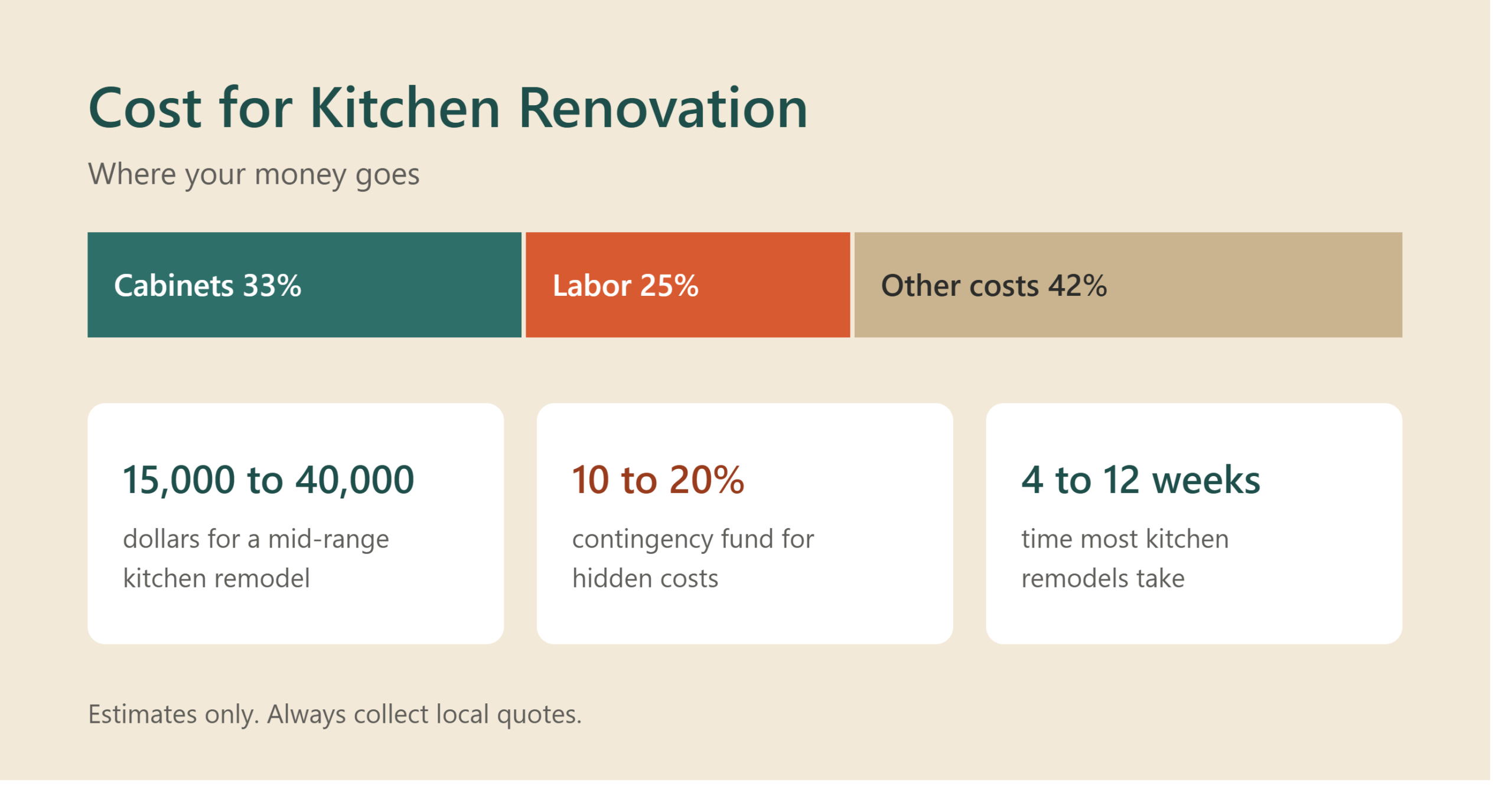
Hidden Costs to Expect
Hidden costs hurt many people. After opening walls, my crew once found old wiring and water damage, and another time pest problems; each needed repair that the first quote missed. Permits, waste removal, and temporary cooking arrangements add more to the cost for kitchen renovation. Keep a contingency fund of ten to twenty percent so surprises never cut quality.
Smart Ways to Save
You can achieve lower spending without a cheap look. Keep your current layout so plumbing and electrical work stay simple. Choose mid-priced materials, try painting cabinets, try swapping hardware, and add new lighting. Shop sales and gather three contractor quotes for solid budget control.
Choosing Your Spending Tier
Pick a tier that fits your life. A budget-friendly plan uses cosmetic upgrades and stock materials. A mid-range plan balances style, quality, and durability, and most families choose it. A high-end plan brings custom cabinetry, premium stone, and professional-grade appliances, so decide by how long you stay.
Budget and Timeline Basics
Build a realistic budget by listing must-have items and nice-to-have upgrades, then give each category a spending limit. Most jobs run several weeks, and delivery delays can stretch the timeline. Add flexibility to your schedule. A written plan lets you compare quotes fairly.
Hiring the Right Contractor
Your contractor shapes the quality of finished work. Check licenses, read reviews, and ask for photos of past projects. A fair quote lists materials, labor, timelines, and payment stages. Beware lower offers, because they may hide shortcuts or extra charges.
Conclusion
Planning the cost for kitchen renovation gets easier when you know where the money goes. Cabinets, labor, appliances, and surfaces take the biggest shares, while hidden repairs can raise the final bill. Set a clear budget, keep a reserve fund, and compare several quotes before you hire anyone. With a smart plan, your new kitchen will suit both your lifestyle and your finances.
FAQs
How much is the average cost for kitchen renovation?
Most mid-range remodels cost between 15,000 and 40,000 dollars, depending on size, materials, and your location.
What takes up the biggest share of a kitchen renovation budget?
Cabinets usually take the largest share, often about a third of the total, followed by labor and appliances.
How can I lower the cost for kitchen renovation?
Keep your current layout, choose mid range materials, refresh your cabinets, and compare at least three contractor quotes.
How much extra should I set aside for surprise expenses?
Keep a contingency fund of ten to twenty percent to cover hidden repairs, permits, and other unexpected costs.
