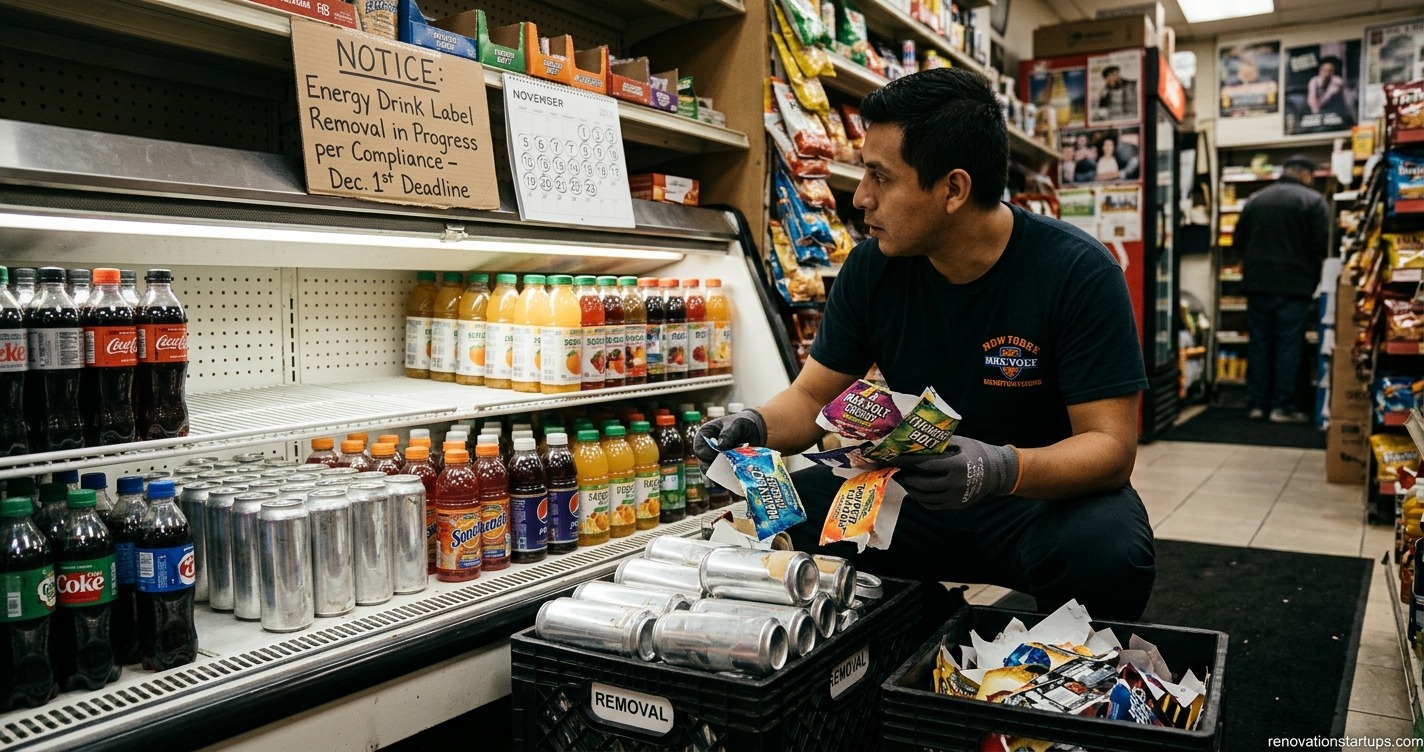
Beverage companies must remove energy drink labels within ninety days under a directive from India’s food regulator, the Food Safety and Standards Authority of India (FSSAI). The directive applies to drinks sold in India. It changes nothing for shoppers in Canada or the United States. The drinks stay legal. Only the words “energy drink” and similar wording have to leave the pack.
Why must beverage companies remove energy drink labels within ninety days?
Have you ever wondered who decides what a can is allowed to call itself? I did too, so I read through the coverage of this order. The logic is simpler than the headlines suggest.
According to reports, FSSAI sent notices in early July to six companies selling products branded as energy drinks. The regulator’s position is that India has no approved standard for a category called “energy drink.” Its food category system exists to classify products for licensing, not to name them on a label. So a caffeinated drink is, in the regulator’s eyes, a caffeinated beverage. Nothing more.
Claims drew scrutiny as well. Phrases such as “vitalizes body and mind” or relief from “general weakness” were described as misleading. Food regulators tend to treat promises like that as health claims, and health claims need evidence.
How did the industry respond?
Several brands reportedly pushed back. Their worry is easy to understand, because a name built on instant energy is hard to replace. Government sources later indicated the industry agreed to comply, and the window stayed in place. One detail is still unclear. Reports say the starting date for counting the ninety days has not been spelled out.
What does the ninety-day timeline involve?
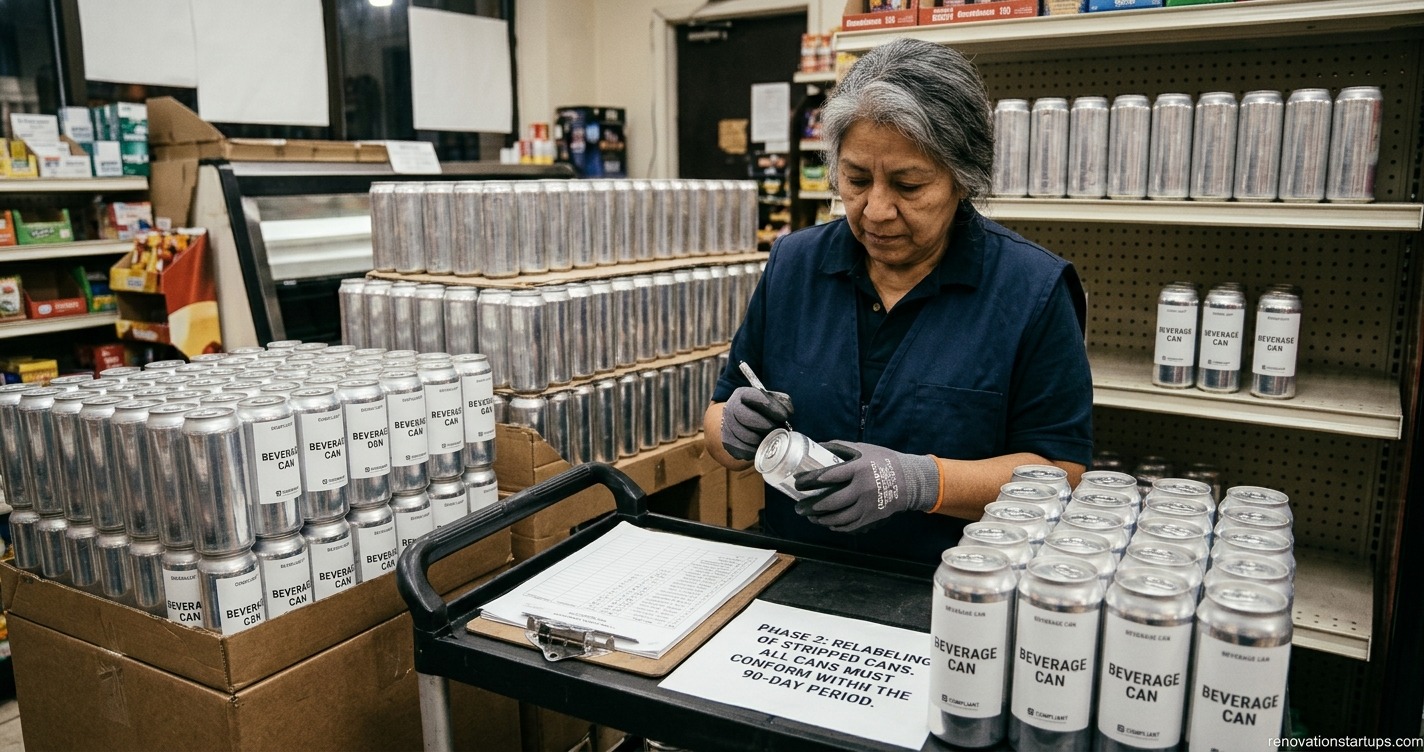
Ninety days is roughly three months. That sounds generous until you map the work. Artwork must be redrawn, approved and printed. Filling lines need new materials. Old stock has to move. Online listings need rewriting too, since a pack that says “caffeinated beverage” next to a web page that still says “energy drink” leaves a company exposed.
Picture a mid-sized brand with twelve flavours sold in cans and bottles. That is at least twenty-four label files, before multipack cartons and promotional displays. Each needs internal review and a regulatory check. Printers also want signed-off artwork before they book a slot, so starting early matters more than working fast.
So beverage companies must remove energy drink labels within ninety days, and they must also tidy the information that stays behind. In practice that means:
- Cans, bottles and cartons carry new wording.
- Product titles in online shops and delivery apps are edited.
- Advertising and in-store displays drop the term and any performance claims.
- Caffeine content per serving is shown clearly.
Reports describe a caffeine range of 145 mg to 300 mg per litre for this product type. Where an ingredient like taurine is used, the label is expected to state the maximum daily amount.
Does this rule apply in Canada or the United States?
No. And this is the part I want you to hear clearly. When you see a headline saying beverage companies must remove energy drink labels within ninety days, check which country it is about. This one is Indian.
Canada actually leans the other way. Health Canada regulates caffeinated energy drinks as foods. Rules include a cap of 180 mg of caffeine per single serving, mandatory cautionary statements, and guidance allowing “caffeinated energy drink” as the statement of identity on the principal display panel when the product name does not make the category clear. Put simply, Canadian labels are asked to say what the product is.
For the United States, I did not find a comparable order, and I won’t guess at details. If you sell in either market, confirm the current rules with Health Canada, the Canadian Food Inspection Agency, or a regulatory adviser before you print anything. We always suggest checking primary sources first.
What does the order mean for shoppers and brands?
What changes for shoppers?
You will probably see the same drinks with different wording. Think of it as a renaming, not a recall. A few questions are still worth asking yourself. Does the new wording tell you there is plenty of caffeine inside? Do you check the amount per serving before reaching for a second can? Health Canada suggests adults keep daily caffeine to 400 mg, and one can may hold up to 180 mg. Two cans already use most of that allowance. When people ask why beverage companies must remove energy drink labels within ninety days, the short answer is consumer clarity. A label should describe the contents, not promise a feeling. I think that is a fair standard, even if brands dislike it.
What changes for brands?
In our reading, marketing is the harder part. A category word carries years of recognition. Coverage notes that “caffeinated beverage” may mean less to shoppers than the phrase they already know. Brands will lean on flavour, colour and logos instead. That is a real branding puzzle, and I expect plenty of debate about it. Because beverage companies must remove energy drink labels within ninety days, design teams are working to a tight clock, and a rushed redesign can go wrong.
What should businesses selling in several markets do?
Avoid a single global label. A pack can be compliant in one country and misbranded in another. Since beverage companies must remove energy drink labels within ninety days in one market only, a global redesign could be unnecessary. A sensible routine looks like this:
- List every market where each product is sold.
- Compare the wording each regulator allows for that product type.
- Update online listings on the same day as the physical label.
- Keep dated records of every artwork approval.
I have seen small importers skip that last step, then spend weeks hunting for proof of which version shipped. Records are boring. They also save time.
Final thoughts
The headline is accurate once you add the missing detail: beverage companies must remove energy drink labels within ninety days, but only in India. For everyone else the lesson is practical. Read the label, check the caffeine per serving, and treat a renamed can as the same can. Which part surprised you most? I would love to hear it.
FAQ
Beverage companies must remove energy drink labels within ninety days: is it a global rule?
No. The directive comes from India’s regulator and covers products sold in India. Other countries set their own labelling rules.
Are energy drinks still allowed to be sold in India?
Yes. Reports stress that caffeinated beverages remain permitted. The action targets the wording on the label, not the drinks themselves.
What can companies call these drinks instead?
The term most often mentioned is “caffeinated beverage,” which matches the regulator’s category language.
Are energy drinks legal in Canada?
Yes. Health Canada treats them as foods and sets limits on caffeine, along with labelling and cautionary requirements.
