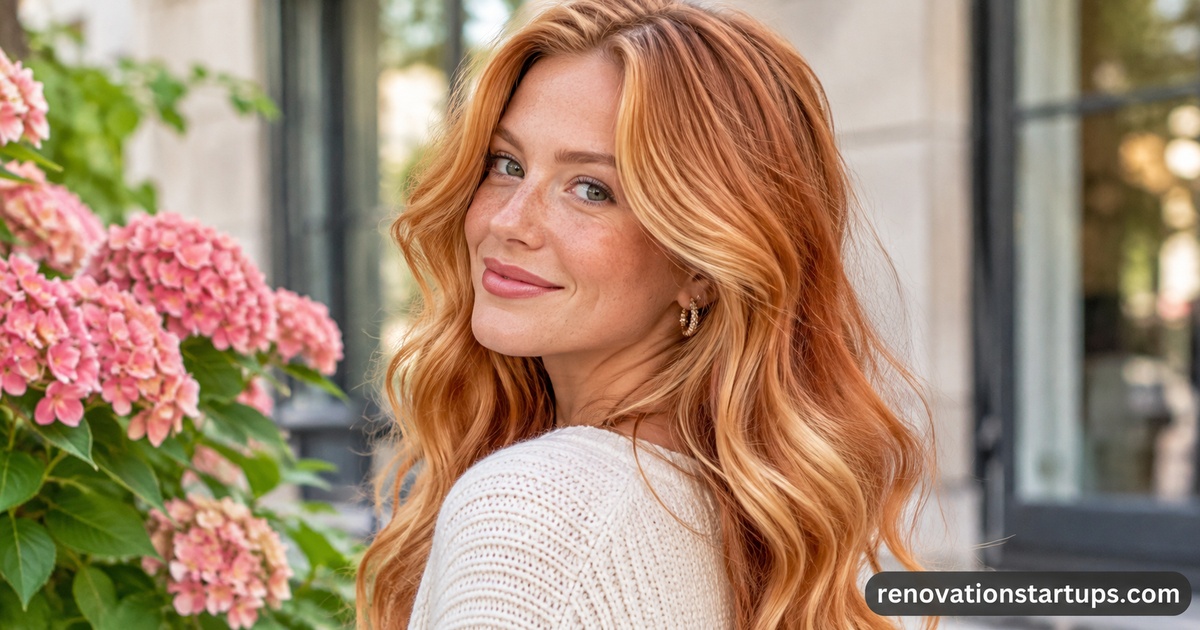
Strawberry blonde is a light hair colour that sits between blonde and red, usually a pale golden base with a soft copper or rosy tint. It is uncommon in nature, most often seen in people of northern European ancestry, and you can also recreate it with salon colour.
Ever spotted someone whose hair looks golden in the shade and almost peach in the sun? That’s the effect we’re talking about, and it fools people all the time. Stick around and we’ll sort out the shades, the science and the upkeep.
What colour is strawberry blonde, exactly?
Think of blonde with a drop of red stirred in. The result is lighter and softer than ginger, and warmer than plain golden blonde. Colourists often describe it as a level 8 or 9 base on the 10-point scale, topped with a copper or rose reflect.
Lighting changes everything. Under cool office lights it can read rosy, while outdoors in late afternoon it tends to look more coppery. I’d judge the shade near a window before committing to a salon photo.
Why do some people have strawberry blonde hair naturally?
It comes down to pigment. Hair gets its colour from two kinds of melanin: eumelanin, which gives brown and black tones, and pheomelanin, which gives red and yellow ones. When someone has little eumelanin and a fair amount of pheomelanin, the result is that light, warm blend.
Genetics plays the starring role. Variants of the MC1R gene are linked with red hair, and they are usually recessive. That means two parents with brown or blonde hair can still carry the variant and have a child with this colouring. Surprised? A lot of families are.
Many children start out bright and watch it deepen toward light brown or auburn through the teen years. Others keep it into adulthood, and it often fades to a sandy tone before it goes grey.
How rare is this hair colour in Canada?
Red hair as a whole is uncommon, usually estimated at one to two per cent of people worldwide. Scotland is often cited as the high point, at roughly 13 per cent. Canada has deep Scottish and Irish roots, especially in places like Nova Scotia and the Ottawa Valley, so red tones feel familiar in many communities. Exact figures for this lighter shade don’t really exist, since researchers rarely separate it from other red tones. Honest answer: it’s rare, but nobody has a clean number.
Where does the name come from?
The name is a plain colour comparison, likened to the pinkish-gold flush of ripe strawberries. Artists were drawn to red-toned hair long before salons existed. The Venetian painter Titian lent his name to a golden-red shade still called Titian, and the Pre-Raphaelite painters of nineteenth-century Britain, including Dante Gabriel Rossetti, painted red-haired models again and again. Fashion keeps circling back to these warm tones whenever rose-gold and peach shades trend.
Which shades can you choose from?
Light and rosy
A pale blonde with a faint peach or pink glow. It’s delicate and needs toning every four to six weeks or so, otherwise it drifts yellow.
Golden and honey
Warmer, with more gold than pink. It’s the easiest version to wear and the most forgiving as it grows out.
Copper-leaning
Deeper, closer to a dark-blonde base with a strong copper wash. Pick this if you want warmth without going full red.
Who does strawberry blonde suit?
Undertone matters more than skin depth. Check the veins on your inner wrist in daylight. Greenish usually means warm, blue or purple means cool. Warm undertones tend to love golden and honey versions, while cool ones often look great in rosy shades.
Deeper skin tones can pull it off too, usually through face-framing highlights or balayage rather than a full head of light colour. A good colourist will test a few tones against your face, so don’t skip the consultation.
Makeup shifts too. Peach and coral lips, bronze eyeshadow and brows one shade deeper than your hair keep the face defined. Green eyes tend to pop against these tones, which is part of the appeal.
How do you get this colour in a salon or at home?
Your starting point decides how you’ll reach strawberry blonde, so let’s split it by hair type.
Starting from light blonde or light brown
A gloss or demi-permanent colour in a copper-rose tone may be all you need. It’s gentle and the cheapest route. In Canada, expect roughly $60 to $120 CAD for a gloss in many cities, though prices swing between Toronto, Halifax and smaller towns.
Starting from dark brown or previously coloured hair
You’ll need lightening first, then toning. This is where damage happens, and where box dye often turns orange or patchy. Lightening plus toner commonly runs $200 to $500 CAD or more, and it can take two visits. I’d book a professional here, because fixing a bad job costs more than doing it properly once.
How do you stop it from fading?
Red pigment molecules tend to sit near the surface of the hair, which is why warm shades fade faster than cool ones. Strawberry blonde loses the most colour in the first few weeks, so early habits matter. Here’s what helps:
- Wash with lukewarm or cool water, and less often.
- Use sulphate-free shampoo and a copper or rose colour-depositing conditioner.
- Apply heat protectant before any hot tool.
- Rinse with clean water before and after swimming, since chlorine strips colour.
Canadian winters add a twist. Dry indoor heat leaves coloured hair brittle, so swap in a richer conditioner or leave-in from November to March. Live in a hard-water area? A shower filter can keep the shade from going dull.
What mistakes do people make with this colour?
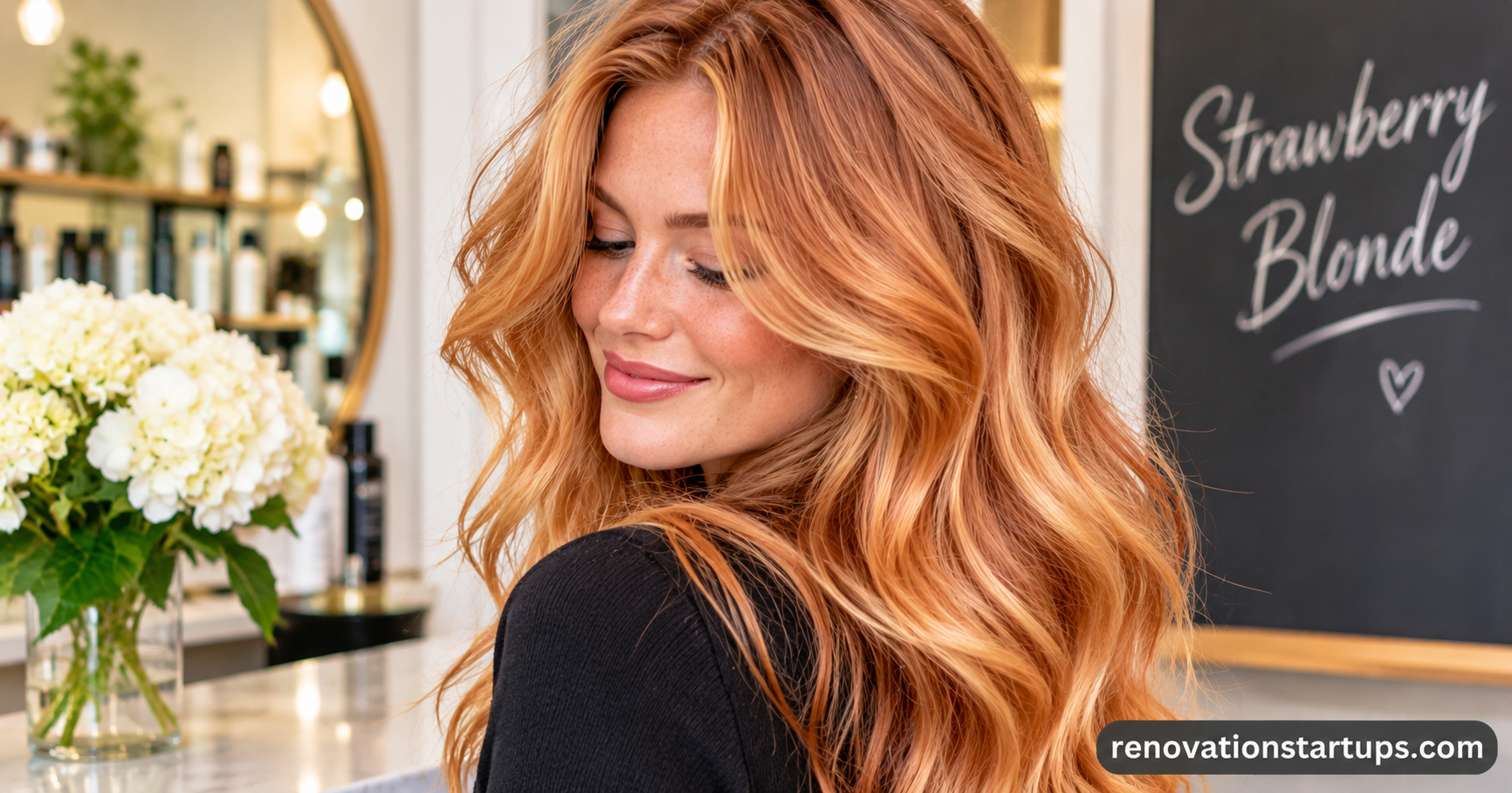
The big one is chasing a photo without checking the lighting it was taken in. Filters and ring lights push pictures rosier than real life. Second, skipping toner. Without it, even a lovely first result can turn brassy within a month. Third, using purple shampoo too often. It’s made to cancel yellow, so on a warm shade it can dull the copper you paid for. Use it sparingly, if at all, and ask your colourist what they’d recommend. Small habits, big difference.
FAQ
Is strawberry blonde the same as ginger?
No. Ginger is a stronger orange or red. This colour is lighter, with a blonde base and only a hint of red, and colourists mix them with different formulas.
Can brown hair turn strawberry blonde?
Yes, but it needs lightening first, then toning. Results depend on your starting shade and hair condition, so a consultation is the sensible first step.
How often should you tone it?
Most people refresh every four to eight weeks, depending on how fast their colour fades. Your colourist can set a schedule that suits you.
Does lightening damage your hair?
A gloss is gentle. Lightening is what dries hair out, so add a deep conditioning mask once a week and keep heat low. Ready to try it? Show your colourist two or three photos in different light, and ask for a tone that matches your undertone.
