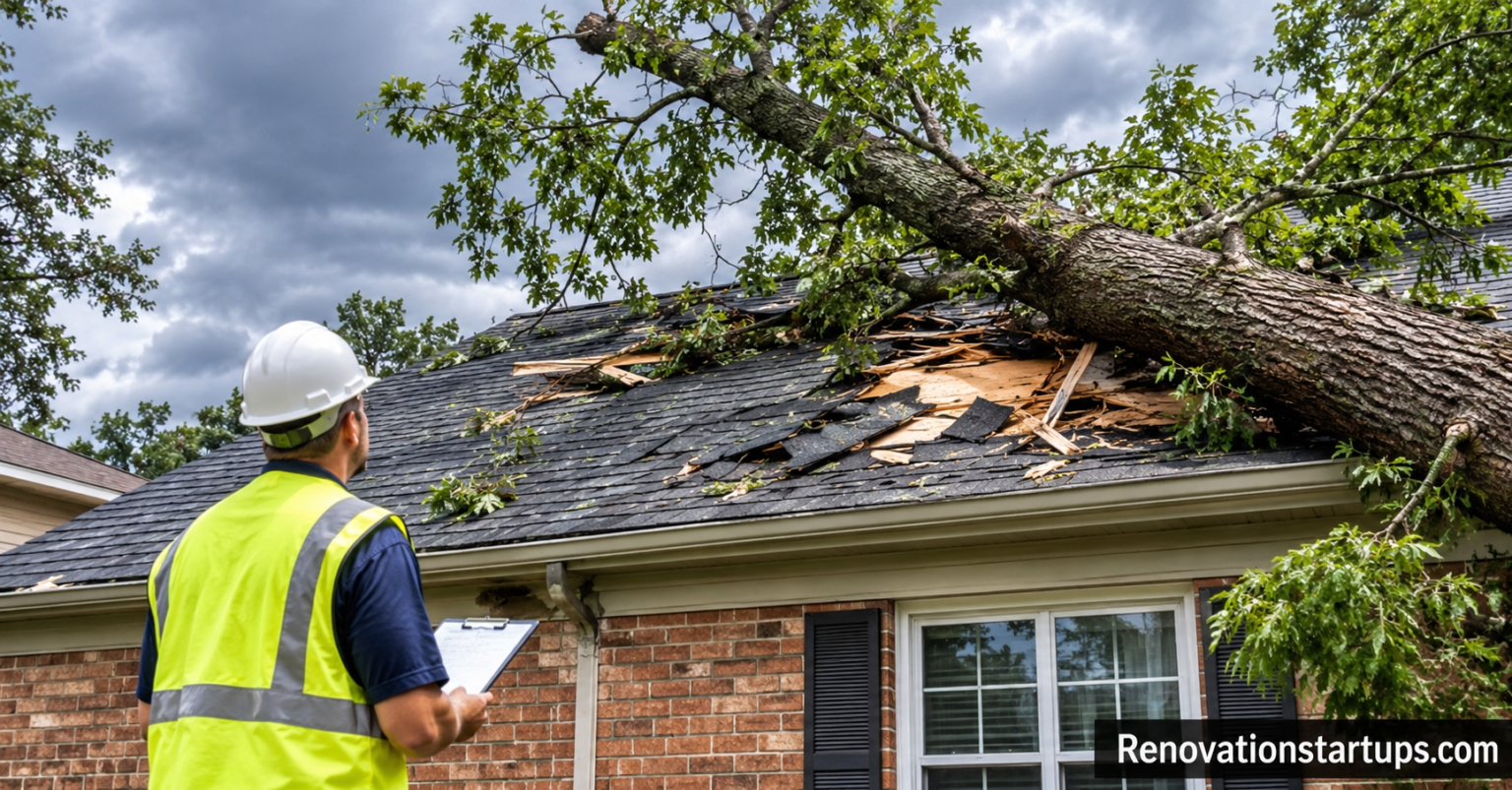
Storm damage roof repair is the work of finding, recording, and correcting roof problems that hail, wind, or rain cause. Most Texas homeowners call for it after a hailstorm or a stretch of severe thunderstorms. The first goal is a dry house, and the second is a sound roof.
What Is Storm Damage Roof Repair in Texas?
Hail and storm restoration reaches beyond a single repaired spot, since crews also examine the layers below the surface. I studied six Texas company pages for this guide and noticed that the best ones lay out their steps in a clear sequence. The sections below follow that sequence so you can predict each stage of a visit.
What Types of Storm Damage Hit Texas Roofs?
Every type of storm leaves its own pattern on a roof, so each calls for its own solution. If you can name the type, you can brief an inspector faster.
Hail bruising dents the shingle surface, while high winds peel up edges and scatter flying debris. Wind-driven rain and heavy rain then force water intrusion into any opening, and fallen tree damage can break through a roof fast. Perkins Roofing explains that Gulf Coast weather brings sudden storms to The Woodlands.
What Signs Show a Roof Needs Repair After a Storm?
Walk each side of the house and scan every slope for missing shingles, cracked shingles, curling shingles, and lifted shingles. Creased shingles and granule loss often appear alongside them and reduce water shedding. Frame Restoration’s inspection page ties bruised shingles and punctured shingle mats to hail.
Granules in gutters give an early warning, because the shingle surface sheds them as it wears down. Dark bruise-like spots, bent flashing, and dents in gutters and vents supply further evidence, and granules also gather where gutters and downspouts empty. I photograph every sign from the yard before I phone anyone.
What Shows Up Inside the Home After a Storm?
Water stains on ceilings, ceiling leaks, and peeling paint near ceilings often show up first. Daylight visible through the attic means the roof layer has an opening, so scan the rafters with a flashlight. Sagging roof areas and soft or rotted decking show that water stayed in place for some time.
Attic insulation that feels wet proves water reached the interior. Mold growth can follow while the insulation stays damp, and Perkins Roofing adds that leaks damage wiring and walls. After every large storm, I inspect my own attic.
What Should I Do in the First 72 Hours After a Hailstorm?
Stay off from the roof and keep a safe distance from the downed power lines. The first 72 hours after a hailstorm shape how smoothly the claim goes. The Texas Department of Insurance advises homeowners to notify their insurer promptly, and timely reporting keeps your options open.
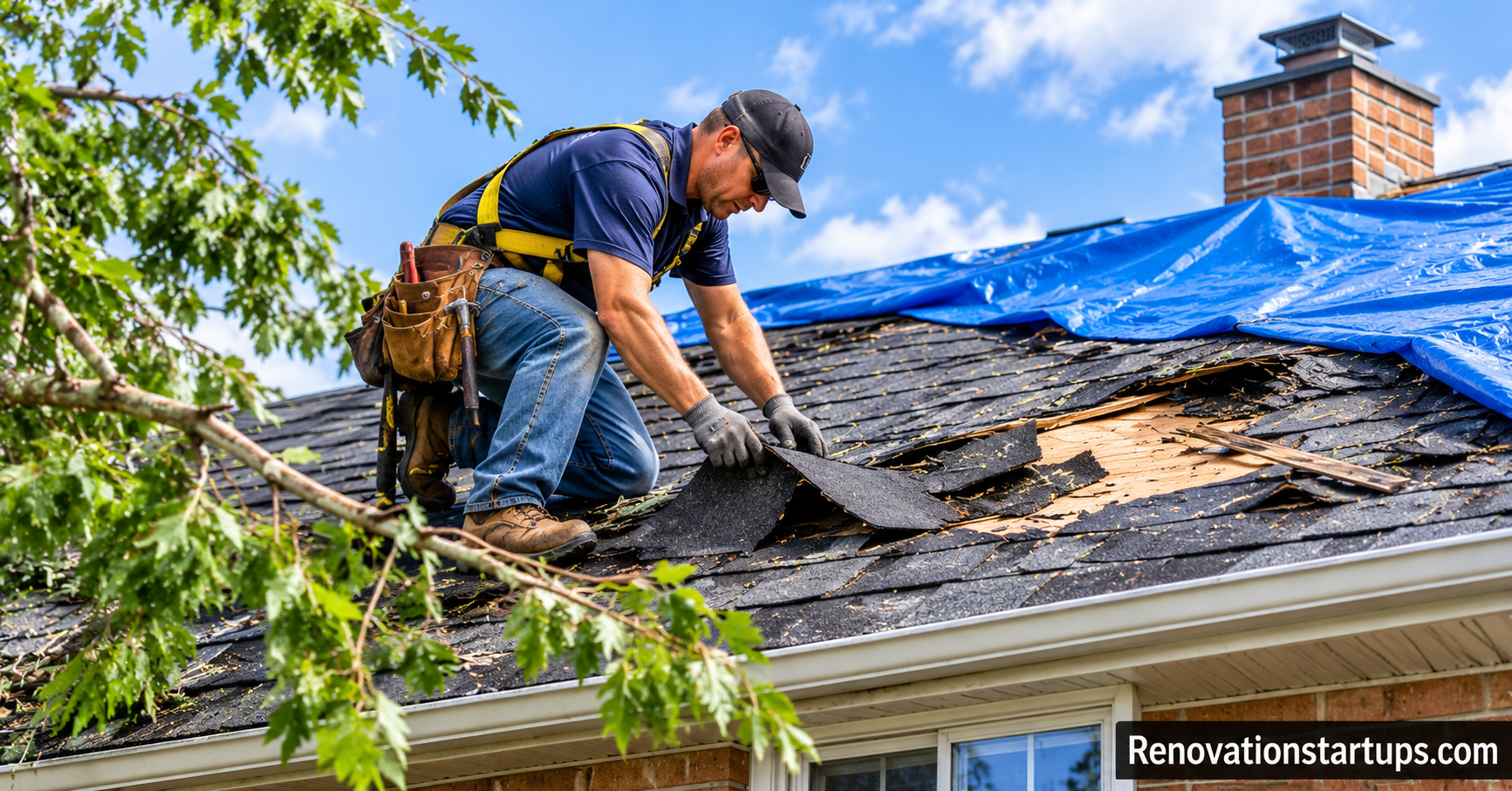
Limit yourself to temporary repairs, such as emergency tarping over an active leak, and keep receipts for each purchase. Leave permanent work until the adjuster has viewed the damage. A ground-level inspection with binoculars lets you spot curled edges without risking a fall.
What Parts of a Roof Do Storms Damage Most?
Shingles absorb the first impact, yet flashing, vents, and gutters fail nearly as often. The asphalt shingles, composite shingles,and metal roofing, and tile roofing each respond to impact differently. So inspectors examine every layer of the roof, not just the surface.
Wind loosens shingle tabs and ridge caps and bends the drip edge along the eaves. Water then reaches the roof decking and underlayment, travels sideways, and shows up inside later. Roof vents, pipe boots, chimney flashing, skylights, turbine caps, and other roof penetrations leak once storms damage their seals.
How Do Inspectors Find Hidden Storm Damage?
Inspectors pair an on-roof inspection with a drone inspection, thermal imaging, and attic checks, since each method reveals what the others overlook. HUT Services names drones, thermal imaging, and on-roof inspections on its storm page. Ask which tools each company brings to your roof type.
Frame Restoration includes test squares, labeled roof planes, slope-by-slope photos, and dated photos in its visit. Its inspector performs a soft metals check on gutters, vents, and AC fins, then handles attic and interior checks to follow leak paths. The visit ends with a photo-documented damage report, and commercial roofs add ponding water and open seams to the review.
What Should I Look For in a Storm Damage Roofing Provider?
Pick a local contractor with a street address, a written scope, and straightforward paperwork. Verify that the company is licensed, insured and bonded, and request photos before you sign anything. A provider that states what it will and will not do deserves extra confidence.
Credentials narrow the field, though no badge replaces a direct conversation. Texas Home Upgrade lists GAF Certified status, and Perkins Roofing lists CertainTeed SELECT ShingleMaster, BBB Accredited Business, and Roofing Contractors Association of Texas membership. Firehouse Roofing displays NTRCA, LP SmartSide, and Owens Corning Platinum Preferred badges, while HUT Services displays a FORTIFIED Roof logo.
How Do I Spot a Storm Chaser?
A storm chaser arrives right after a storm with out-of-area license plates and asks for a signature the same day. Texas rules make it illegal to waive a deductible, so any offer to absorb yours signals trouble. Decline anyone who offers to take over your claim.
Door-to-door contractors who appear uninvited owe you answers about licensing, references, and a local office. Frame Restoration posts a storm chaser checklist, and I agree with each item. Established local companies accept comparison and leave you time to decide.
How Do Insurance Claims Work for Roof Storm Damage in Texas?
You submit a homeowners insurance claim to your insurance carrier, and the carrier issues the coverage decision. A contractor can offer insurance claim assistance through photos and paperwork, though not through negotiation.
Before the adjuster visits, ask your agent about replacement cost vs.The actual money value and your wind and hail deductible. Insurers may ask for proof of deductible payment, and Perkins Roofing notes that a named peril can influence whether mold costs qualify for coverage. Thorough claim documentation shapes your settlement, so sort every photo and estimate together.
What Role Can a Roofer Play in My Claim?
A roofer records damage, describes repair options, and meets your adjuster on site if you request it. Frame Restoration cites Insurance Code §4102.163, which stops a roofer who may perform the work from acting as an adjuster. Texas Home Upgrade says it is not a public adjuster.
Perkins Roofing describes a former claims adjuster who inspects roofs and walks homeowners through claims. Request each provider’s role in writing, and review Texas roofing laws and permits before work begins. Defined roles keep the repair, the claim, and your deductible apart.
Should I Repair or Replace After Storm Damage?
Repair or replace depends on roof age and condition, widespread impacts, decking health, and shingle matching. Limited damage on one slope often needs only a targeted repair, not a full replacement. Recurring leaks and hidden moisture damage point toward roof replacement.
A discontinued shingle line can prevent a clean repair, and Frame Restoration names the same limit. Cobra Contracting adds that repeated patching merely postpones a larger problem on a worn roof. Some storm damage reroof projects follow that reasoning, and the aim remains weather-resilient restoration with long-term protection.
Which Texas Companies Offer Storm Damage Roof Repair?
This guide covers six Texas companies: HUT Services, Texas Home Upgrade, Cobra Contracting, Perkins Roofing, Firehouse Roofing, and Frame Restoration. The first four serve the Houston area, and the final two serve Dallas–Fort Worth. Each brand offers the services listed on its own website, so confirm details there.
I report only what each page states, and I flag any service that appears solely in a navigation menu. I omit anything unverified on the company’s own site. Verify each source yourself before calling, since companies revise their pages.
Which Houston-Area Companies Handle Storm Damage?
HUT Services covers Greater Houston, Cypress, and Pearland, and its storm page mentions a free storm damage roof assessment and emergency tarping. Texas Home Upgrade covers ZIP 77038 and offers a free roof inspection. Cobra Contracting, headquartered in Katy, also writes about Fulshear on its blog.
HUT Services also lists a final quality check, impact-rated materials, and emergency roof repair. Cobra Contracting’s article discusses flashing repair, shingle replacement, decking replacement, and valleys, plus a membrane patch, seam repair, and roof restoration coating for commercial roofs. Perkins Roofing, which covers The Woodlands, Conroe, and Spring, offers a free inspection after every major storm and links a 24/7 storm response page, while its menu includes leak repair, waterproofing, and roof maintenance.
Which Dallas–Fort Worth Companies Handle Storm Damage?
Firehouse Roofing has worked in Dallas–Fort Worth since 1997 and operates five DFW locations. Its storm page mentions same-day availability, a hail damage report, and a 50-year workmanship warranty. Frame Restoration operates from Frisco and has served the region since 2016.
Frame Restoration offers free hail inspections, a written roofing scope, and a 10-year workmanship warranty, and it covers Plano and Arlington. Firehouse Roofing places gutter repair and siding repair in its menu, although its storm page centers on inspection, documentation, and repair options. Phone either company with your storm date and request a written scope.
Why Is This Website the Easiest Way to Find a Provider?
This website gathers the checklist, the questions, and the brand details in one place, so you compare providers without juggling twenty tabs. You read plain guidance first and then open each company’s own site. That sequence keeps the final decision with you.
I built this guide from the storm pages of six Texas companies, and I report what each page states, not what a brochure might imply. You can apply the checklist to any provider, including companies not named here. Begin with a free roof inspection request and place all the written scopes side by side.
Where Can I Find Storm Damage Roof Repair in Texas?
Start with a documented inspection, a written scope, and a provider who explains its role in your claim. Use the checklist in this guide, then visit each brand’s website to confirm its services. Browse this website whenever you need to find storm damage roof repair Texas providers, and compare them before you sign.
What Do Texas Homeowners Ask Most About Storm Roof Repairs?
Texas homeowners mainly ask about timing, value, coverage, and do-it-yourself fixes. The brief answers below rely on the sources I read and the guidance I cited earlier. Each answer sends you back to a provider’s own page, because services and policies change.
How Soon Should I Call After a Storm?
Call a roofer once you finish photographing the damage and notifying your insurer. Perkins Roofing and HUT Services both emphasize fast action, because delays worsen leaks and complicate claims. Waiting allows small leaks and problems to grow into much larger repairs.
Is It Worth Repairing Storm Damage Right Away?
Yes, because early repairs limit structural weakness and interior harm. HUT Services also mentions local building codes, which influence the materials and methods a Texas roof needs. Prompt work usually costs less than a second round of damage after the next storm.
Does Homeowners Insurance Cover Hail Damage?
Frame Restoration cites the Texas Department of Insurance, which says a policy with wind and hail coverage should pay for hail damage, subject to your deductible. Your policy language and your carrier’s review settle the details in each case. Ask your agent before you file, and keep your photos organized.
Can I Fix Storm Damage Myself?
Cobra Contracting warns that walking on a damaged roof is truly dangerous. Wrong materials can also trap moisture and complicate a later insurance review. Call a professional, keep people away from the area, and photograph the damage from the ground.
