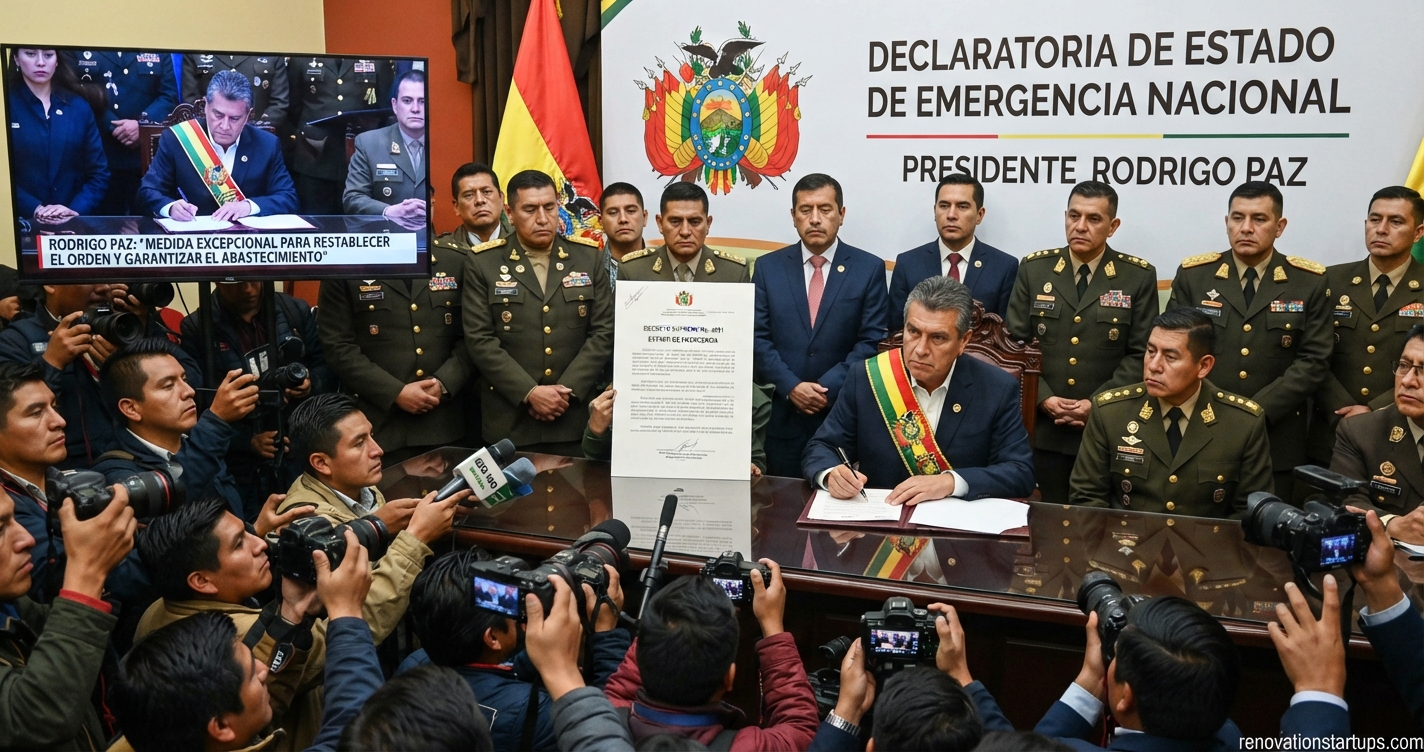
The rodrigo paz bolivia emergency declaration is really a series of four orders. President Rodrigo Paz declared an economic emergency in December 2025, an energy emergency in January 2026, a nationwide state of emergency over blockades in June 2026 and a climate emergency on 31 October 2026. Each one answered a different problem.
Why would one president sign four emergency orders in under a year? Stick with me and we’ll sort it out, one decree at a time.
Who is Rodrigo Paz and why did Bolivia reach this point?
Rodrigo Paz Pereira of the Christian Democratic Party won the October 2025 runoff with 54.5 per cent of the vote and took office on 8 November 2025. He said he inherited the worst economic crisis in Bolivia’s history, with a huge deficit, drained foreign reserves and a dollar shortage. Fuel prices had stayed fixed for roughly two decades, and supply was running short. I think this is the part many summaries skip. Without it, the orders look random. With it, a pattern shows up, and it explains why the rodrigo paz bolivia emergency declaration keeps returning in new forms.
What is the rodrigo paz bolivia emergency declaration made of?
Four announcements sit under that label. Here they are in order.
Decree 5503 (December 2025): the economy
Paz announced it on the night of 17 December 2025, and it took effect once it reached the official gazette. Decree 5503 declares an economic, financial, energy and social emergency and runs to 120 articles. Its headline move ended fuel subsidies that had been in place for about 20 years. Reporting at the time put the jump at around 86 per cent for gasoline and more than 160 per cent for diesel. The package also loosened the exchange-rate regime and lifted the minimum wage by 20 per cent to Bs 3,300. By the next morning, cars were queuing at petrol stations in La Paz.
Decree 5517 (January 2026): energy
Decree 5517, promulgated in mid-January, declared an energy and social emergency across the whole territory. It acknowledged fuel shortages, higher logistics costs and stalled activity, and it authorized private imports of petroleum products. That last detail is worth noticing, because it opened a door in a market the state had long controlled.
The June 2026 nationwide state of emergency
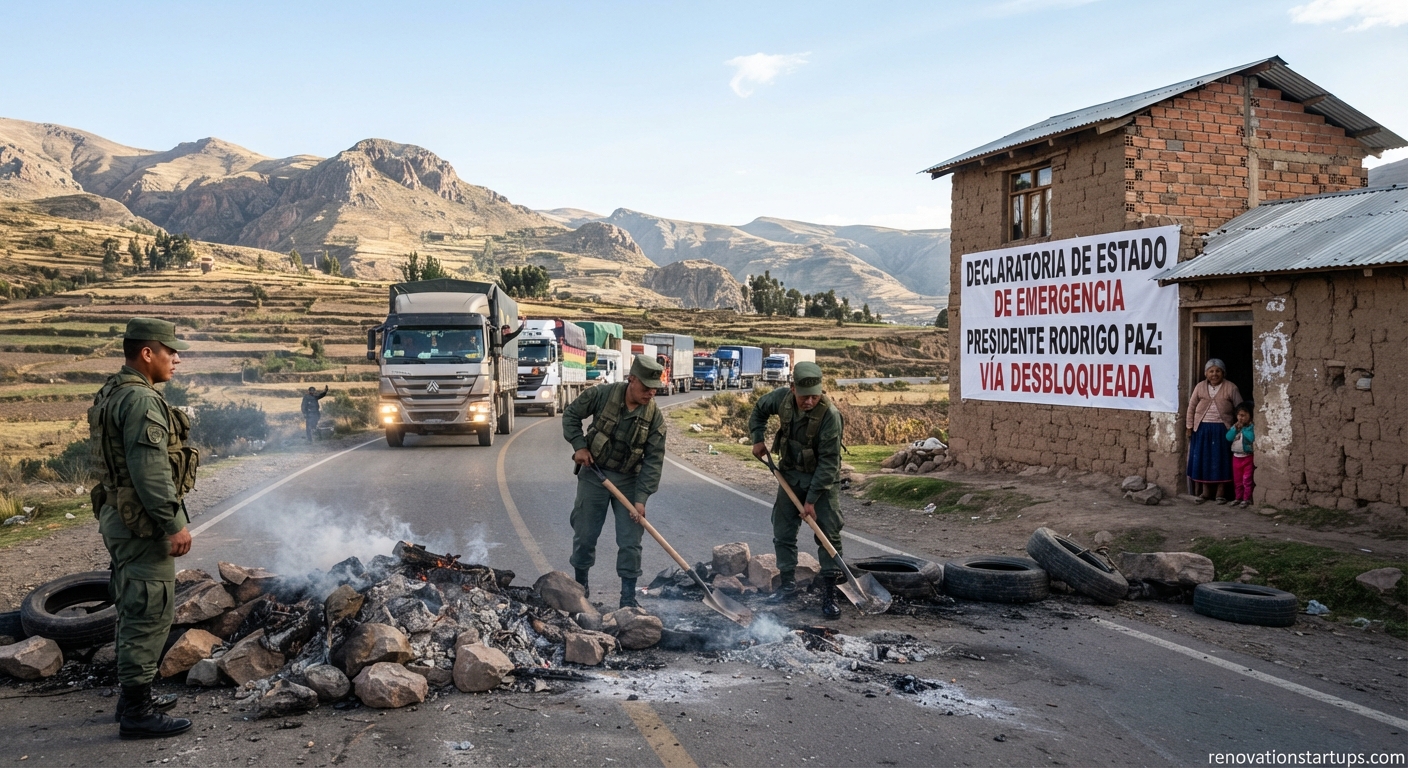
On 20 June 2026, after more than 50 days of protests and road blockades over living costs, Paz addressed the country on television and declared a state of emergency. It lets the armed forces clear blockades that had stranded fuel tankers and strained food and medicine supplies. The speech came hours after a deal with the Bolivian Workers’ Confederation, the main union. Some protesters still demanded his resignation. Paz insisted the order was meant to restore freedom of movement, not restrict daily life. Earlier that month he had signed a law making such declarations easier.
The 31 October 2026 El Niño emergency
Decree 5759 declares a national emergency over drought and flood risk tied to El Niño in 2026 and 2027. A government report cited at the time said drought was affecting 78,000 families in six of Bolivia’s nine departments and had killed more than 75,000 head of cattle. The order speeds up funding and sends more rescue teams to hard-hit areas. It also asks governors, police and the military to coordinate.
Why do people disagree about the rodrigo paz bolivia emergency declaration?
Supporters argue the orders were overdue. In their view, fuel shortages, a dollar squeeze and organized blockades left little choice, and the government says the emergency tools protect supply for ordinary families. Critics, including unions and some Indigenous leaders, point to austerity that raised living costs almost overnight.
Paz himself described the blockades as an organized attempt to destabilize democracy, while protesters say they are reacting to higher prices. One economist quoted in the financial press said the direction made macroeconomic sense, but the timing was politically questionable. I think both camps are describing something real. A fiscal fix and a cost-of-living shock can land on the same day.
What should Canadians know before travelling to Bolivia?
The Government of Canada’s travel advice for Bolivia says to exercise a high degree of caution, with regional advisories, and to avoid all travel to the Chapare region. It notes that weeks of protests in spring 2026 disrupted fuel, food and medical supplies. If you travel by road, including to El Alto airport, blockades can slow or stop you, so check flights and routes before leaving. Never try to cross a roadblock. Because the rodrigo paz bolivia emergency declaration can change security conditions quickly, read the official page on the day you depart. You can also register with Registration of Canadians Abroad.
Where does the rodrigo paz bolivia emergency declaration go from here?
Weather assessments cited internationally suggest this El Niño could be unusually strong, with a peak reportedly around November and December 2026. For Bolivia, that means drought in some regions and flooding in others, and the climate order is built for both. The earlier decrees remain part of the legal record, so the economic changes cannot simply be undone with a speech. What would I watch? Fuel prices, union talks and the rainy season.
FAQ
Is Bolivia in a state of emergency right now?
At least in the climate sense, yes. The 31 October 2026 decree declares a national emergency over El Niño, and it sits within the wider rodrigo paz bolivia emergency declaration timeline. I could not confirm whether the June security order is still active, so check official Bolivian sources.
Did Bolivia remove fuel subsidies?
Yes. Decree 5503 ended subsidies that had held fuel prices steady for about 20 years, and prices rose sharply in December 2025.
Is it safe to travel to Bolivia right now?
Canada advises a high degree of caution and says to avoid the Chapare region. Conditions can change fast, so read the current advisory before you book and again before you fly.
