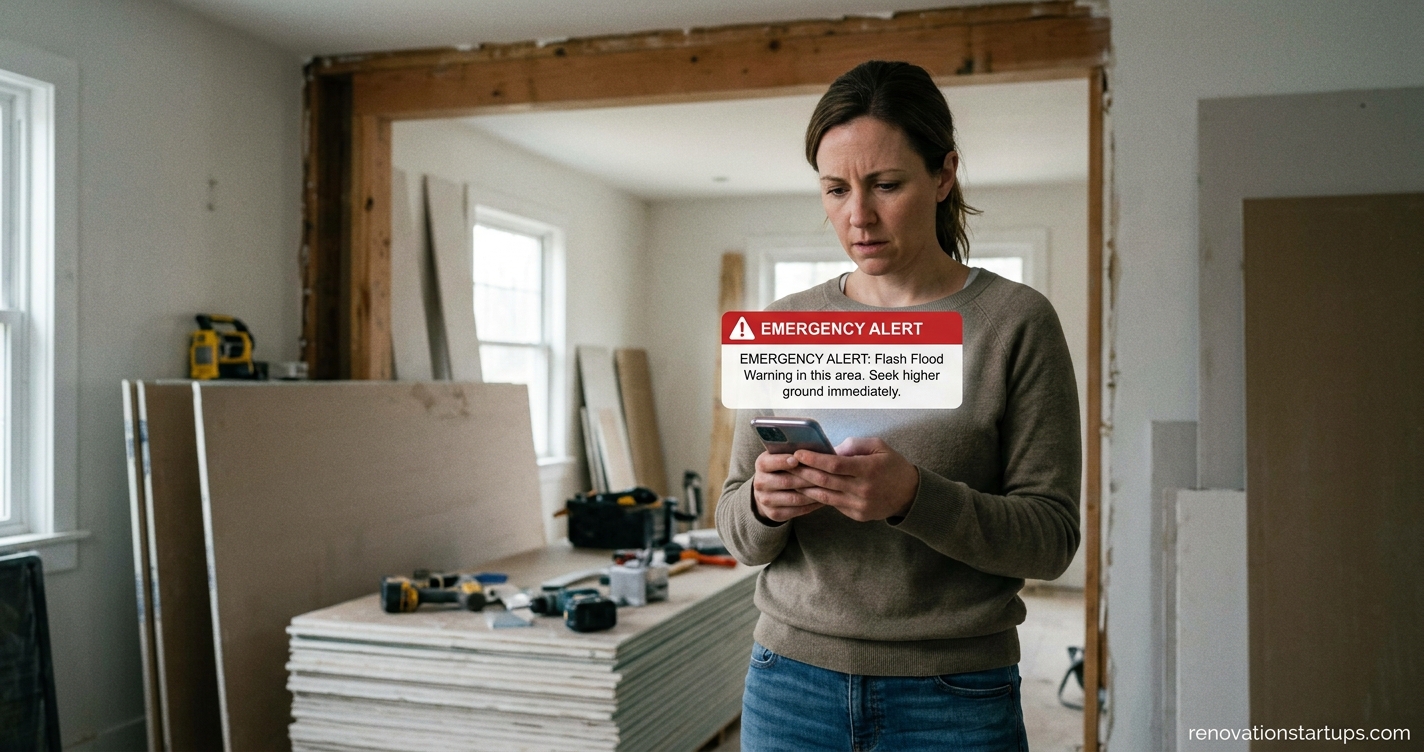
Emergency alerts are urgent public warnings that government authorities send when lives or property face immediate danger. In Canada they reach people through television, radio and compatible LTE or 5G phones under a national system called Alert Ready. Threat-to-life warnings cannot be switched off on your phone. When one sounds, stop when it is safe, read the whole message and follow its instructions. Readers in the United States receive comparable warnings through their own national system, so the same steps apply.
What are emergency alerts and who sends them?
Only authorized government agencies can issue them. Provincial and territorial emergency management offices handle events such as wildfires, floods and child abductions, while Environment and Climate Change Canada covers severe weather.
Behind them sits Alert Ready, a partnership among federal, provincial and territorial governments, broadcasters, wireless providers and the national weather agency. A central hub called the National Alert Aggregation and Dissemination System collects each message and hands it to television, radio and mobile distributors. Alberta once ran its own standalone system and later retired it in favour of the national one. In a single recent year the network carried more than 900 alerts across the country, though most people see only a few.
What types of warnings can Canadians receive?
Threat-to-life alerts
Alert Ready covers a defined list of events. Tornadoes, flash floods, wildfires, earthquakes, tsunamis, hurricanes, industrial fires and biological hazards all qualify. Amber Alerts for abducted children travel the same route. These interrupt television and radio and trigger a loud tone on phones. Alternate formats, such as text-to-speech or vibration, may be used for people who are deaf, hard of hearing, blind or partially sighted, although not every authority or device supports emergency alerts in those formats.
Colour-coded weather warnings
Environment and Climate Change Canada rates its warnings, watches and advisories in yellow, orange or red. Yellow is the most common and signals moderate, localized impacts. Orange points to significant damage or disruption that may be widespread and last for days. Red is rare and reserved for extreme events, such as the 1998 ice storm in Ontario and Quebec. Each title combines the colour, the type and the hazard, as in Orange Warning followed by Blizzard. Special weather statements appear in grey. Most of these show up in weather apps rather than as loud phone alarms.
Test messages
Tests begin with the Canadian Alert Attention Signal and are labelled as tests. National testing usually happens in spring during Emergency Preparedness Week, often around 1:55 p.m. local time, and some provinces run extra tests in autumn. Each province or territory decides whether to take part, and Quebec keeps its own schedule. The point is simple. People should recognize the sound of emergency alerts before a real one arrives. Treat the exercise as a free check that your phone actually rings.
How do emergency alerts reach your phone?
Wireless messages travel over the cellular network and are targeted by location. Radio and television cover wide regions, but a phone alert can be limited to a small area, sometimes a handful of neighbourhoods, so your phone receives one only when it sits inside the affected zone. That matters. If your phone sounds, danger is close.
Three conditions must be met. You need a compatible LTE or 5G smartphone, current operating software and a live cellular connection when the alert goes out. One Canadian carrier states that LTE and 5G smartphones sold after March 2018 are compatible. An alert does not cut off a call or data session. You hear a tone similar to call waiting, and the message appears once the call ends. Canadian rules also require carriers to send threat-to-life warnings automatically, so there is no opt-out.
Why didn’t my phone get the alert?
Missed emergency alerts are common, and the causes are usually ordinary.
Your device or software
Older phones limited to non-LTE networks, Wi-Fi-only tablets and outdated operating systems can all miss a message. A phone bought outside Canada may need confirmation of support from its manufacturer.
Your connection
A voice call can move a phone onto a slower network for its duration. Weak signal, as in an underground parking garage, can block reception entirely. A phone that is switched off shows nothing, though it may display an alert that is still active once you power it back on inside the area.
Your settings
Alerts follow your device volume. Silent mode or Do Not Disturb can bury them among other notifications, so check that your alert volume is not muted. Carriers cannot count how many phones received a given test, so telling your provincial emergency office about a miss is genuinely useful.
What should you do when emergency alerts sound?
Stop and read the full message
Pull over before reading if you are driving. The text names the hazard, the area and the action to take, such as evacuating, sheltering in place or limiting travel.
Act on the instructions
Do not wait to see how neighbours react. Alerts go out when time is short, and hesitation is the usual mistake. In a wildfire or flood, a few minutes can separate a calm departure from a dangerous one.
Confirm through local sources
Check local radio, your provincial emergency website or the national weather agency. A message asking for money, banking details or passwords should be treated as a scam, because genuine warnings do not request them.
Wait for the all-clear
An all-clear usually goes out through broadcasters only, not to phones, so keep a battery radio nearby and a charged power bank. Alerts are one layer of protection, not a full plan, and an outage can interrupt any single channel.

How can you get your phone ready before an alert arrives?
A few minutes of setup makes emergency alerts more dependable when they count.
- Install operating system updates, since outdated software can block reception.
- Confirm with your carrier that your model supports wireless public alerting.
- Check your alert and notification volume, and add exceptions to Do Not Disturb if your phone allows it.
- Bookmark your provincial emergency page and know which local radio station carries warnings.
- Keep a 72-hour kit with water, food, medication, a flashlight and a battery radio.
FAQ
Can you turn off Alert Ready alerts on your phone?
For threat-to-life warnings, no. Canadian rules require carriers to send them to compatible phones in the target area. Optional weather app notifications can be adjusted in the app itself.
Why did my phone go off when nothing is happening near me?
Alert areas can be wide, and you may be near the edge of one. Some dangers, such as a tornado, can also be close without being visible. Read the location details in the message.
What is the loud sound on my phone during a test?
It is the Canadian Alert Attention Signal, followed by a message marked as a test. No action is needed.
Do smartwatches and tablets get Alert Ready messages?
Some can, but not always in the standard format. Do not count on a watch or tablet as your only source.
