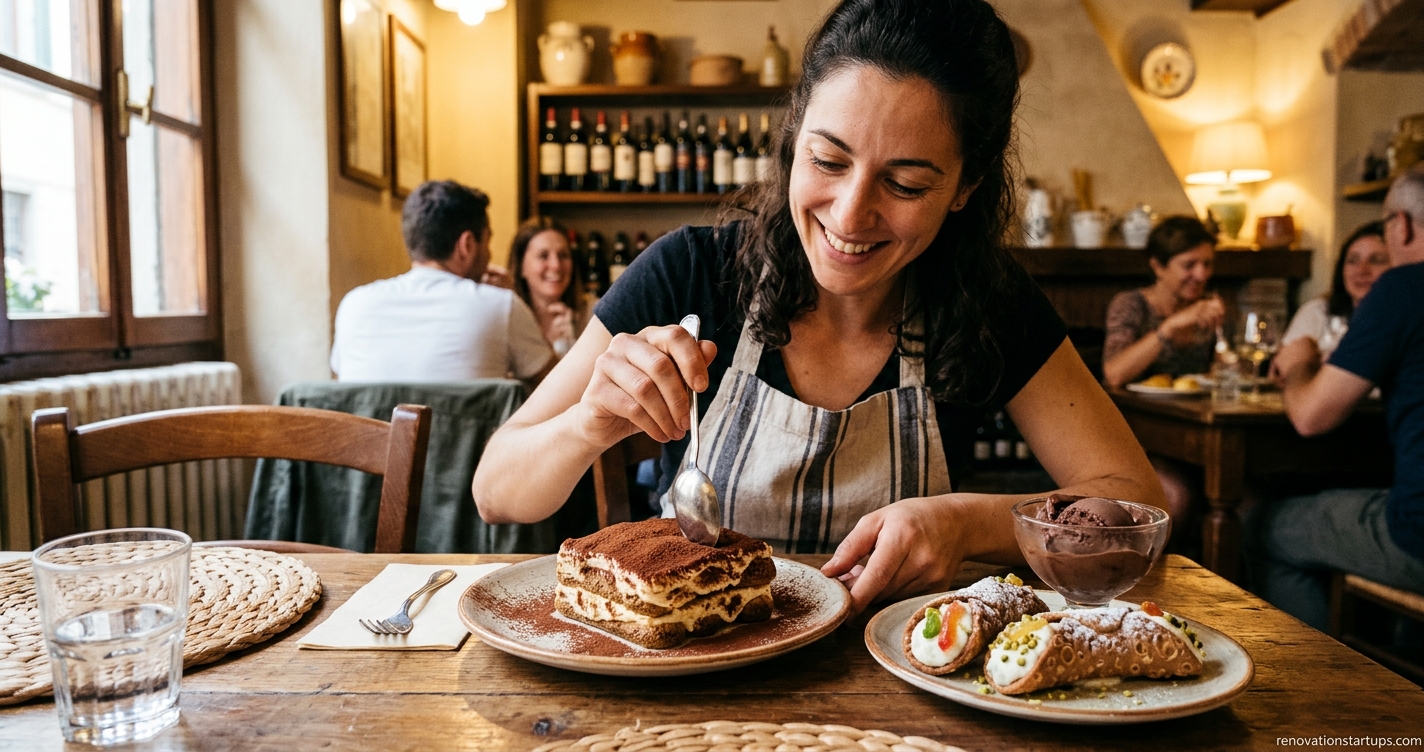
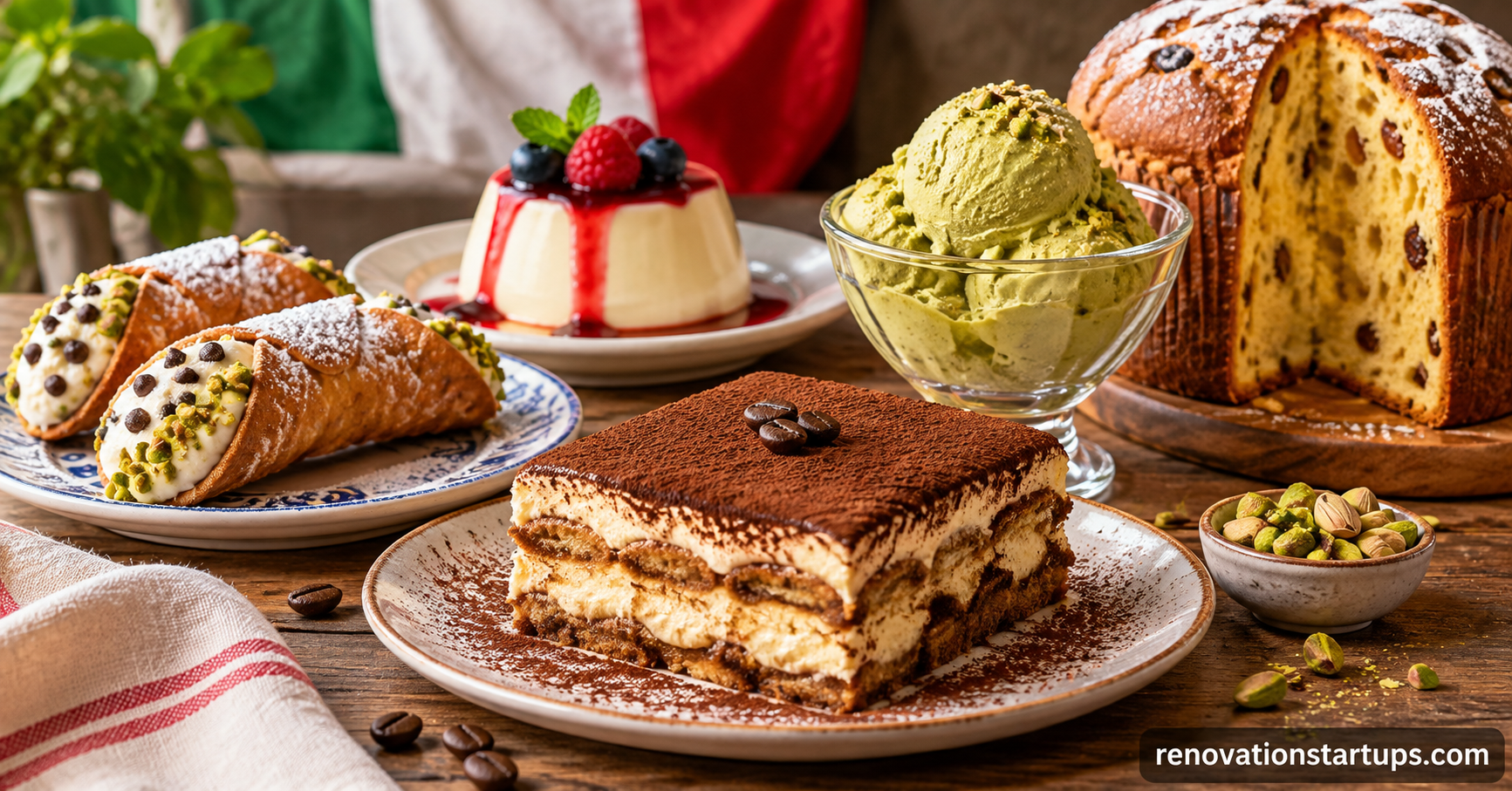
The best Italian desserts include tiramisu, cannoli, panna cotta, gelato and panettone. Each comes from a different part of Italy, and each leans on a few honest ingredients: mascarpone, ricotta, cream, espresso and almonds. Not sure where to start? Pick tiramisu for a dinner party, gelato for a hot day and cannoli when you just want a treat.
Picture this. You’re standing at a bakery counter, a dozen pastries staring back at you, and the line behind you keeps growing. We’ve all been there. I like to think of Italian sweets, called dolci, as a short list of old friends rather than a long menu of strangers. Once you know five or six of them, you can walk into almost any Italian café in Canada or the United States and order with confidence. Ready to meet them?
What Makes the Best Italian Desserts Different from Other Sweets?
Italian desserts favour restraint. A classic dolce rarely piles on frosting or sugar. It lets one idea shine, whether that’s coffee, citrus or sheep’s milk ricotta. That is why the best Italian desserts taste rich without feeling heavy.
Geography shapes them too. Sicily gave us cannoli and cassata, influenced in part by centuries of Arab-era almonds, citrus and sugar on the island. Naples is known for sfogliatella and babà, while the north leans on mascarpone and cream. Many sweets are tied to a date: panettone at Christmas, pastiera at Easter, zeppole on Saint Joseph’s Day. A tray of tiramisu often calls for around 500 grams of mascarpone, which tells you how much work one cheese is doing.
Which Italian Desserts Should You Try First?
Here are five I’d point any friend toward, and why.
Tiramisu
Tiramisu layers espresso-soaked savoiardi (ladyfingers) with a cream of mascarpone, egg and sugar, then dusts the top with cocoa. The name roughly means “pick me up.” Its origin is debated, and both Veneto and Friuli-Venezia Giulia lay claim to it. Chill it overnight. The biscuits soften and the flavours settle.
Cannoli
Cannoli are crisp fried pastry tubes filled with sweetened ricotta, and they come from Sicily. One tube is a cannolo. The traditional filling uses sheep’s milk ricotta, finished with chocolate chips or candied orange. Buy them filled to order, because a shell left sitting goes soft within hours.
Panna Cotta
Panna cotta, meaning “cooked cream,” is usually linked to Piedmont in northern Italy. Cream, sugar and gelatin set into a silky, slightly wobbly custard, served with berries or caramel. It’s the friendliest recipe on this list for beginners.
Gelato
Gelato is churned slowly, so it holds far less air than most ice cream, and it’s served a little warmer. The result tastes denser and more intense. Try pistachio or nocciola (hazelnut) first. They tell you quickly whether a shop is serious.
Panettone
Panettone is a tall, domed sweet bread from Milan, studded with raisins and candied citrus. A traditional loaf ferments for a couple of days, which gives it that feathery, pulled crumb. Slice it with a serrated knife and pair it with coffee or a glass of sweet wine.
Where Can You Find Authentic Italian Desserts in Canada?
Canada’s Italian communities have kept these recipes alive for generations. 🇨🇦 In Toronto, try Corso Italia or the College Street strip. In Montreal, wander Little Italy near Jean-Talon Market. In Vancouver, head to Commercial Drive. A cannolo at a neighbourhood bakery often lands somewhere around $4 to $6 CAD, though prices vary.
Here’s my filter for spotting the best Italian desserts behind a glass counter:
- The pastries look handmade and slightly uneven.
- Cannoli are filled when you order them.
- Gelato sits in covered tins with muted, natural colours.
- The staff can tell you which region a recipe comes from.
In my experience, a bright green pistachio gelato is a warning sign. Real pistachio looks dull and a little sandy.
How Can You Make Italian Desserts at Home?
Start with panna cotta. It’s the easiest of the best Italian desserts to make at home, and nobody will guess it took ten minutes of actual work. Use 35% cream (sold as whipping cream in most Canadian stores) and plan on about four hours in the fridge.
Tiramisu is the next step up. Mascarpone is easy to find in Canadian grocery stores now. Traditional recipes use raw egg yolks, and Health Canada advises being careful with raw or undercooked eggs, so choose pasteurized eggs or a cooked custard version, especially when serving children, pregnant guests or older adults.
A few habits make a real difference:
- Taste your espresso before you use it. It shapes the whole dessert.
- Don’t overwhip mascarpone. It turns grainy fast.
- Leave time for chilling, because many of these improve overnight.
- Keep it simple. The best Italian desserts rarely need decoration.
Frequently Asked Questions About Italian Desserts
What is the most popular Italian dessert?
Tiramisu tops most lists of the best Italian desserts, with cannoli and gelato close behind.
What is the difference between gelato and ice cream?
Gelato has less air and is served warmer, so the flavours taste stronger and the texture feels smoother. Ice cream usually has more air and often more butterfat, which makes it lighter and colder on the tongue.
What is a traditional Italian dessert for Christmas?
Panettone is the best known. Pandoro, torrone and struffoli are popular too, depending on the region.
Can you make tiramisu without raw eggs?
Yes. Use pasteurized eggs, or cook the yolks gently with sugar over a pot of simmering water, a method similar to zabaglione, before folding them into the mascarpone.
