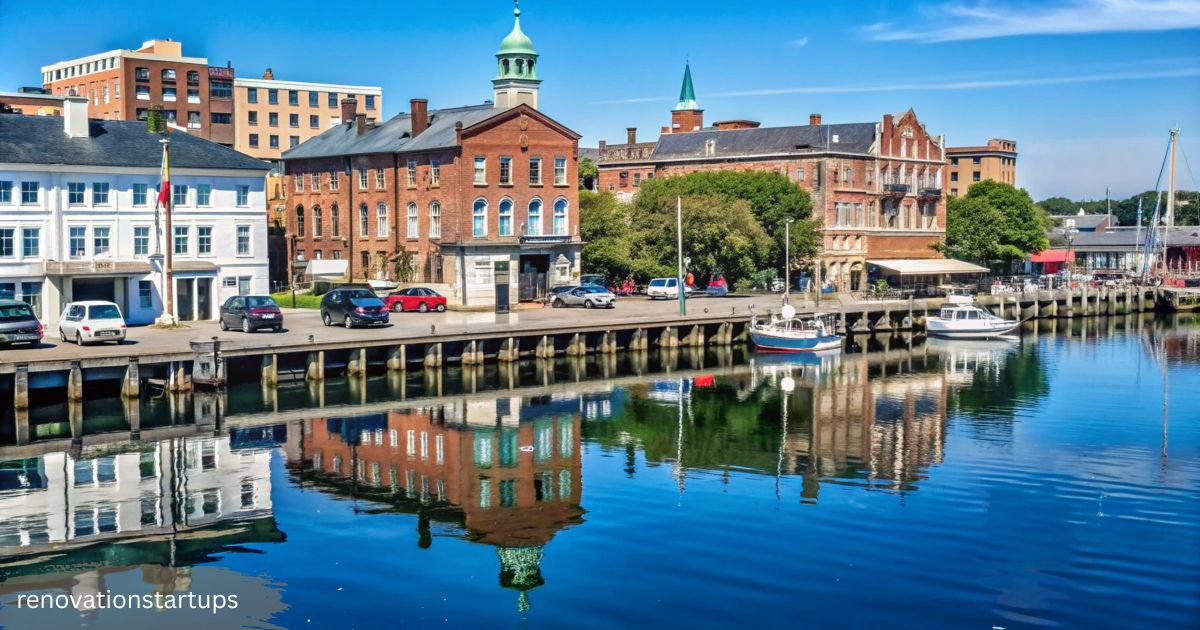
Hagersville is a community of just over 3,000 people in Haldimand County, sitting along Highway 6 about 40 kilometres south of Hamilton. It’s a place most people outside southwestern Ontario only know for one thing a tire fire that burned for seventeen days in 1990 but there’s considerably more to the town than that single event, and locals will tell you the same.
Where Is Hagersville Located?
The town sits at roughly 42°57′N, 80°03′W, along what used to be called the Plank Road and is now Highway 6. It’s about 40–45 km southwest of Hamilton, 15 km southwest of Caledonia, and 24 km northeast of Port Dover close enough for a day trip, far enough that it still feels like its own place rather than a Hamilton suburb.
Two First Nations communities border the area closely: the Six Nations of the Grand River and the Mississaugas of the Credit. That proximity matters; it shapes a good chunk of the region’s history, economy, and even the emergency response during the events of 1990, when federal agencies overseeing reserve land got pulled into the cleanup alongside provincial crews.
What Is Hagersville Known For?
Ask anyone in southern Ontario over the age of 40 and they’ll mention the same thing: the fire. On February 12, 1990, a blaze broke out at the Tyre King Tire Recycling yard on Concession 13 in Walpole Township, roughly 8 km from the town centre. The facility held an estimated 14 million scrap tires stacked in towering piles, and once the fire caught, it was almost impossible to contain.
What Actually Caused the Fire?
Investigators concluded the fire was likely set deliberately. Five people were eventually implicated; one pleaded guilty and testified against the others, who were convicted of mischief with sentences ranging from one to four months light penalties, considering the scale of what followed. The site had already drawn provincial scrutiny for years; its operator had reportedly resisted government orders to reduce fire risk, citing the cost.
How Long Did It Burn, and What Was the Damage?
Twenty-four fire departments fought the blaze for seventeen days using backhoes to break apart the piles and hand-held hoses, which crews found more effective than aerial water bombers (freezing temperatures grounded the water bomber for all but two days). By the time it was out, the fire had consumed the rough equivalent of eighteen football fields of tires, cost the province an estimated $15–25 million to extinguish, and forced up to 4,000 residents from their homes.
Oily runoff from the melting rubber seeped into local soil and groundwater, and the smoke plume was visible for kilometres. The disaster is credited somewhat grimly with pushing Ontario to overhaul how scrap tires are stored, eventually leading to formal tire-recycling programs still in use across the province today.
What Is the History Behind the Name?
The settlement traces back to around 1855, when brothers Charles and David Hager bought up much of the central land along the Plank Road. Charles built a hotel at the corner of the road and Indian Line in 1852, and it doubled as the area’s first post office.
A postmaster named Joseph Seymour suggested naming the growing settlement after the Hager family, and it stuck. Rail lines arrived not long after the Canada Southern Railroad in 1870 and the Hamilton and Lake Erie Railway in 1873 turning a farm crossroads into a working village within a couple of decades. By 1899, Haldimand County had named Hagersville one of its key administrative centres.
There’s a More Complicated Side to That Story
Historian Sidney Harring, whose research on 19th-century Indigenous legal history is well documented, tells a less tidy version. According to his account, an Onondaga woman named Mary Martin had been living on and working this land before the Hager family arrived.
A dispute over the arrangement ended up in colonial courts that gave Indigenous claimants almost no real standing, and the land passed to the Hagers through that process rather than an even trade. It’s not a footnote, it’s a pattern that repeated across Upper Canada, and it’s worth knowing if you’re going to understand the town’s full history rather than just the plaque version.
How Many People Live There Today?
Statistics Canada’s 2021 census put Hagersville’s population at 3,059, up 4.1% from 2,815 in 2016, which itself was a 14% jump from 2011’s count of 2,579. That’s a genuinely fast growth curve for a rural Ontario community, and it tracks with what real estate agents in the region have been noticing for years: buyers priced out of Hamilton and the GTA looking further out for a detached home under $600,000, often trading a longer commute for an extra bedroom and a yard.
What Is There to Do in Hagersville?
Local Food and Shops
Hewitt’s Dairy Bar has been serving burgers, fries, and soft-serve to Hagersville locals on Highway 6 since the 1960s and still draws a lineup on summer evenings. Downtown, a small chocolate shop turns out handcrafted sweets with vegan options, and the old Junction Hotel — later the Lawson Hotel, once nicknamed “Murph’s Place” after former NHL player Ron Murphy owned it still stands as a piece of the original main street.
Parks, Rinks, and the Weekly Market
A farmers’ market runs every Wednesday morning downtown, connecting locals to produce and baked goods from surrounding Haldimand farms — a tradition that predates most of the businesses currently open on the main street. The Lions Pool has swimming lessons and a splash pad; the arena hosts Junior C hockey and minor sports through the winter; and Grant Kett Memorial Park has walking trails and an amphitheatre overlooking an old quarry that’s genuinely one of the nicer green spaces in the county.
Is It a Good Place to Settle Down?
That depends on what you’re after. It’s not a city there’s no big-box shopping strip, and the nearest hospital, Haldimand War Memorial Hospital, serves a wide rural catchment rather than just the one town.
But for people who want a detached house, a short commute to Hamilton, and a community small enough that people still recognize each other at the arena, the appeal of Hagersville is obvious. We’ve noticed the same pull toward small Haldimand towns generally, and the population numbers back it up.
Frequently Asked Questions
What caused the 1990 tire fire?
Investigators determined it was likely arson, allegedly carried out by five individuals; one pleaded guilty in exchange for a reduced sentence.
How far is it from Hamilton?
Roughly 40 to 45 kilometres southwest, a drive of about 35–40 minutes via Highway 6.
What is the population now?
According to the 2021 census, it’s 3,059 — up from 2,815 in 2016.
Is there a hospital nearby?
Yes. Haldimand War Memorial Hospital serves the town and the wider rural area around it.
