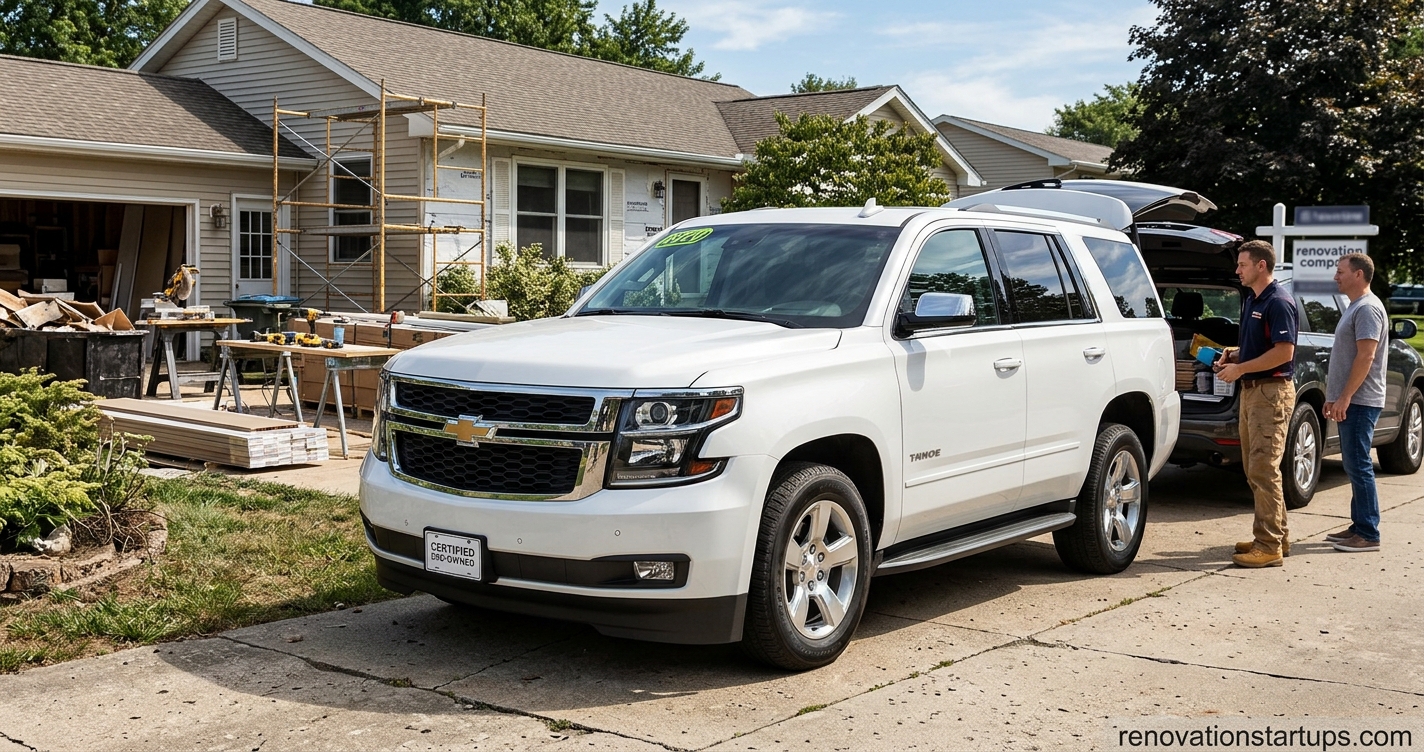
A used Chevy Tahoe is a full-size SUV that seats up to nine, tows roughly 3,800 kg when properly equipped and handles Canadian winters with confidence. Expect to pay about $25,000 for a 2016 model and over $70,000 for a recent one. Check the underbody for rust, listen for engine ticking and order a CARFAX Canada report before paying a deposit.
Ever scraped ice off a crossover that can’t fit the hockey bags, the dog and a week of groceries? Plenty of families have. That is why the Tahoe keeps turning up on shortlists from Halifax to Vancouver. Let’s walk through what matters, so you can shop with a clear head.
Which Tahoe Generations Are Worth Your Attention?
Chevrolet has sold the Tahoe since the mid-1990s, but most Canadian shoppers look at three recent generations.
Third generation, 2007 to 2014
These are the cheapest. They are also the most likely to have rust, worn engines and tired suspensions. A used Chevy Tahoe from this era can work as a winter workhorse, but I would only buy one with a clean underbody and service records.
Fourth generation, 2015 to 2020
This is where most value sits. The cabin feels modern, parts are everywhere and prices have settled. Trims such as the LT and the Premier are common on Canadian lots, and many came with 4WD from the factory.
Fifth generation, 2021 onward
Chevrolet redesigned the Tahoe with independent rear suspension, a roomier third row and a 10-speed automatic. A 3.0L Duramax diesel joined the 5.3L and 6.2L V8 options. The ride is calmer than before, though prices reflect it. A used Chevy Tahoe from 2021 or later also gets the newest cabin technology.
How Much Does a Used Chevy Tahoe Cost in Canada?
Prices swing with trim, kilometres, engine and province. Recent Canadian dealer listings gave us a few anchors:
- A 2016 Tahoe LTZ near $25,000
- A 2021 High Country diesel with about 169,000 km near $48,000
- A 2023 Premier with a 5.3L V8 and roughly 79,000 km near $75,000
- A 2023 RST diesel, GM Certified, near $82,000
Treat these as snapshots, not quotes. Sales tax, dealer fees and licensing come on top, and the rules differ from province to province. Diesel and high trims carry a premium that does not always come back at resale. If a three-year-old example costs nearly as much as a new one, ask yourself whether the warranty is worth more than the discount.
What Problems Do Tahoe Owners Report?
No vehicle is flawless. Technical sources and owner forums point to a handful of recurring complaints. Not every Tahoe will have them, though you should know what to look for.
Lifter trouble on V8 engines
The 5.3L and 6.2L engines use cylinder deactivation, called Active Fuel Management on older models and Dynamic Fuel Management on later ones. The special lifters can collapse or stick. Symptoms include a ticking sound, a rough idle and misfire codes in the P0300 range. Repairs can run into the thousands of dollars.
Oil consumption
Earlier 5.3L engines, especially around 2007 to 2011, have a reputation for burning oil between changes. Check the dipstick and ask how often the seller tops it up.
Rust and brake lines
Road salt is hard on steel brake lines. This matters more in Ontario, Quebec and the Maritimes than in a dry climate. Look along the lines, the frame rails and the rocker panels.
Transmission shudder
Some 2015 to 2019 models with the 8-speed automatic have been reported to shudder or shift harshly. A proper test drive usually exposes it.
How Do You Inspect a Used Chevy Tahoe Before Buying?
A calm, methodical check saves more money than any negotiating trick. Here is the order I would follow:
- Pull a CARFAX Canada report and check for liens, accidents and odometer history.
- Search the VIN in the Transport Canada recall database and confirm repairs were done.
- Start the engine cold and listen for ticking or rattling.
- Scan for stored codes, because a past misfire can point to lifter wear.
- Look underneath with a flashlight for flaking brake lines and frame rust.
- Drive at least 30 minutes, mixing highway and stop-and-go traffic.
- Pay an independent mechanic for a pre-purchase inspection.
Budget for winter tires too. A heavy SUV on worn all-seasons is a bad combination on an icy off-ramp, and a good set of four can cost $1,200 or more. Remaining factory coverage is also worth confirming. GM’s base warranty has been listed at three years or 60,000 km and the powertrain at five years or 100,000 km, so ask a dealer what is left on the specific vehicle.
Private sales have extra paperwork. Ontario, for example, requires a Used Vehicle Information Package, and a safety certificate is needed to register. Check your own province’s rules before meeting a seller.
How Much Can a Used Chevy Tahoe Tow?
Towing is the reason many people shop for a Tahoe in the first place. Ratings depend on year, engine, drivetrain and whether the towing package is fitted. Canadian specification sheets list roughly 3,700 to 3,800 kg for recent models with the package, while older or base versions tow less. One 2019 model was quoted at about 3,900 kg when properly equipped.
Do not rely on the badge. Read the door-jamb label and the owner’s manual for the exact vehicle, then compare the numbers with your trailer’s loaded weight. A Tahoe that tows a 2,500 kg camper comfortably may struggle with a heavier boat on a steep grade.
Gas or Diesel Which Tahoe Engine Fits You?
Canadian fuel ratings show gasoline 4WD models using roughly 12 to 13.7 L/100 km combined. Diesel versions land around 10 to 10.7 L/100 km. That gap adds up if you commute on the 401 or tow a camper to Cape Breton every summer.
Short city trips tell a different story. A diesel costs more up front, and the savings take years to catch up. For mostly local driving, a well-maintained gasoline V8 is usually the simpler and cheaper choice.
Final Thoughts Before You Shop
A used Chevy Tahoe rewards patient buyers. Focus on condition and history over price, test drive it properly and keep a repair fund for older examples. Do that and you will probably drive away happy.
FAQ
Is a used Chevy Tahoe reliable?
It can be. Reliability depends on how the specific vehicle was maintained, where it lived and which engine it has. Lifter wear and rust are the two risks worth checking hardest.
How many kilometres is too many for a Tahoe?
There is no magic number. A serviced Tahoe at 200,000 km can be a smarter buy than a neglected one at 100,000 km. Records and inspection results matter more than the odometer.
Is the Tahoe or the Suburban a better choice?
The Suburban is longer and gives more cargo room behind the third row. The Tahoe is easier to park and slightly cheaper. Choose by how often you fill all the seats and still need luggage space.
Is the diesel Tahoe worth the extra cost?
If you tow often or drive long highway stretches, usually yes. If you stay mostly in the city, probably not.
