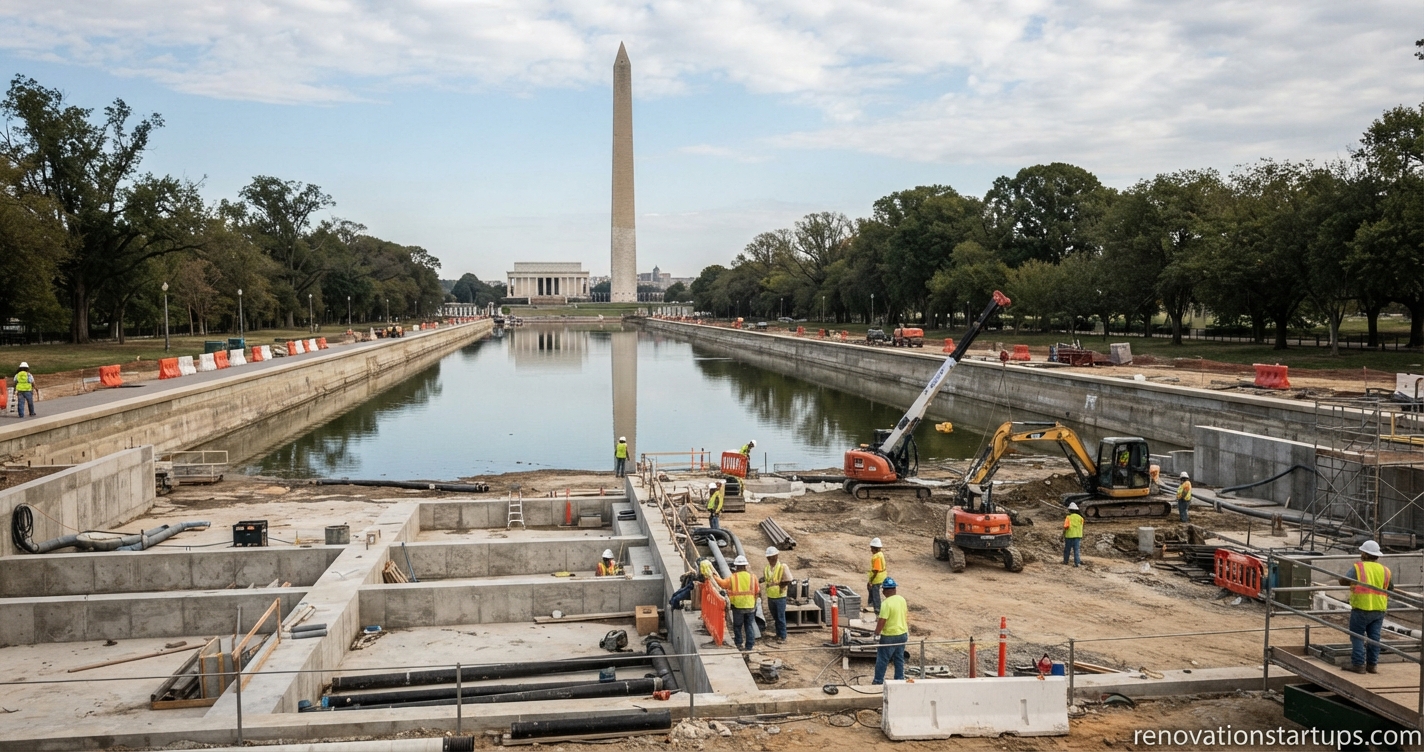
The Trump administration reflecting pool repairs were a 2026 resurfacing of the Lincoln Memorial Reflecting Pool in Washington, D.C. Promised as a two-week job costing about US1.5milliontoUS2 million, the work grew into a months-long project that reports price at more than US$14 million. It needed two drain-and-refill cycles and reopened in the autumn.
Ever watched a two-week paint job turn into a six-month saga? I hadn’t either, until this one. I read through contract records, court filings and press coverage so you don’t have to, and I’ll walk you through it the way I would over coffee .
What are the Trump administration reflecting pool repairs?
The Reflecting Pool is a basin about 2,028 feet long between the Lincoln Memorial and the Washington Monument. Architect Henry Bacon designed it, and it was finished in the early 1920s. It sits inside the National Mall Historic District, which is listed on the US National Register of Historic Places. You have probably seen it behind crowds at the 1963 March on Washington.
It has leaked for most of its life, because it was built on soft, filled ground. A rebuild from 2010 to 2012 cost roughly US$34 million, yet algae and leaks stayed. So in 2026 the Trump administration reflecting pool repairs took a different route: seal the joints, waterproof the basin, add a dark coating the president called “American flag blue,” and install an ozone nanobubble water-treatment system. Cheaper than a rebuild, at least on paper.
How did the repairs unfold from start to finish?
Short version? Fast promise, rough landing. Here is the sequence.
April: a quick fix is promised
Two no-bid contracts came first. A Virginia coatings firm got the waterproofing and coating work in early April, and a second contract worth about US1.7millioncoveredthewater-treatmentsysteminmid-April.AtaWhiteHouseeventonApril23,thepresidentpromisedabouttwoweeksandUS1.5 million to US$2 million. In May, a preservation nonprofit sued, arguing the required historic-preservation review had been skipped.
June: refill, algae and peeling
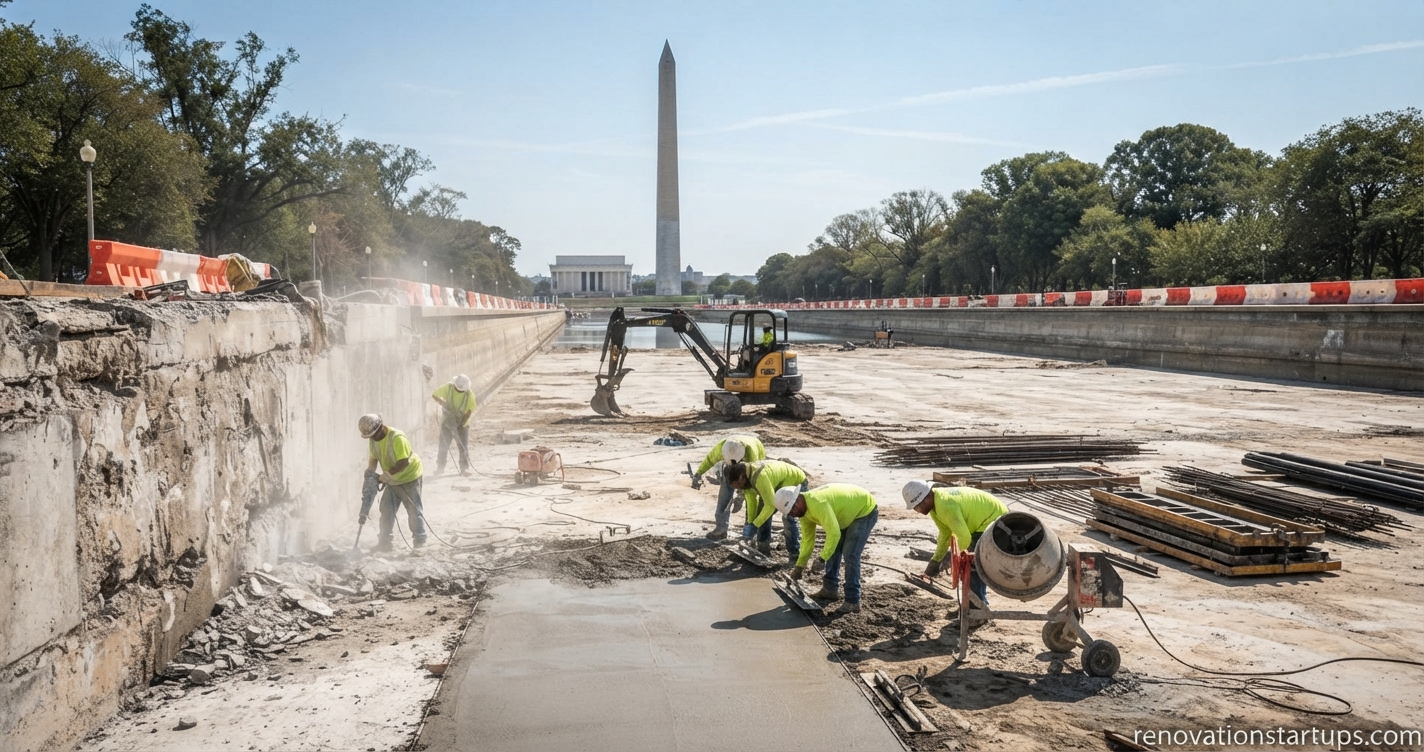
The pool refilled on June 4 and was announced as finished. Within days, algae turned the water green and the new coating started to peel. Park Service crews treated it with hydrogen peroxide and the nanobubble system. One report said the final coat went on less than 24 hours before refilling, though the material reportedly needs about 72 hours to cure. That is a single-source claim, so I would hold it loosely.
July to October: drained again
Crews drained the pool a second time on July 10. Refilling began on October 12, and fencing reportedly came down around October 30 with no formal reopening announcement. On November 2, the president spoke at the pool and called the work a success. By the time the Trump administration reflecting pool repairs reached that speech, the pool had been closed to visitors for most of the year’s busiest months.
How much did the repairs actually cost?
Here is where it gets interesting. Different reports count different contracts, so the price tag depends on who is adding.
- Original promise: about US1.5milliontoUS2 million
- Main coating contract: roughly US14.2milliontoUS14.7 million in federal contract data
- Water-treatment system: about US$1.7 million
- Combined total reported by early August: more than US$16 million
- Extra repair contract reported in September: about US$2.7 million, given to the original contractor without re-bidding
All figures are in US dollars, so Canadian readers should convert at the day’s rate. The Interior Department said it had several funding sources, and signs at the site said park fee revenue paid for the work. I would treat every number as an estimate until an official final accounting appears. Frankly, a gap of that size between promise and record is what drew calls for investigation from members of Congress.
Why were the repairs not put out for competitive bidding?
The Interior Department argued that a normal procurement would have pushed the work past the July 4 anniversary events, so it used no-bid awards instead. Critics, including senators from the opposing party, pointed out that the firms had prior ties to the president. Which side do you find more convincing? We can agree on one thing: skipping bids saves weeks but removes price competition. That trade-off sits at the heart of the Trump administration reflecting pool repairs debate, and no final audit has settled it yet.
Was it vandalism or a construction problem?
This is the question you will hear most. Officials said vandals damaged the pool, and a former Olympic canoeist, David Hearn, was arrested on June 19 after allegedly pulling at peeling material. Prosecutors dropped the felony case on July 31, saying the evidence strongly suggested a rushed and flawed installation. A judge dismissed it with prejudice on October 1.
The president acknowledged “some contractor error” in August while still mentioning vandalism in public remarks. The Washington federal prosecutor’s office also told a court the damage came from a construction defect the Interior Department had known about. That is where the Trump administration reflecting pool repairs turned from a paint job into a legal and political argument.
Should you visit the Reflecting Pool now?
Planning a trip from Toronto, Calgary or anywhere else? Check the National Park Service National Mall page first, since the Trump administration reflecting pool repairs meant long stretches of fencing around the basin. Canadians should also carry a valid passport and check current entry rules on the Canada Border Services Agency website before travelling. My own take: the Lincoln Memorial steps give the classic view of the Washington Monument’s reflection, and water clarity can vary after a refill. Go early on a weekday if you can.
What happens next for the Reflecting Pool?
Three things are still open, and each could change the story. The preservation lawsuit had not been resolved in the latest reporting. The coating and nanobubble system still have to survive a full cycle of seasons. And lawmakers may keep pushing for oversight of the no-bid awards. So the story of the Trump administration reflecting pool repairs is not fully closed, and I will be watching for an official cost audit. Until then, read early headlines with care.
FAQ
How much did the Reflecting Pool repairs cost?
Reports range from about US14milliontomorethanUS16 million for the main work, plus a further US2.7millionrepaircontractreportedinSeptember.TheoriginalpromisewasUS1.5 million to US$2 million.
Is the Reflecting Pool open now?
Water began refilling on October 12, and fencing reportedly came down around October 30. Check the National Park Service site before you travel, because conditions can change.
Did vandals really damage the Reflecting Pool?
Officials said so, but prosecutors later told a court that a rushed and flawed installation was the likelier cause, and the criminal cases were dismissed.
Why was the Reflecting Pool painted blue?
The administration said the dark coating improved waterproofing and looks. Preservation groups argued it altered the pool’s historic character, and one nonprofit sued over it.
