
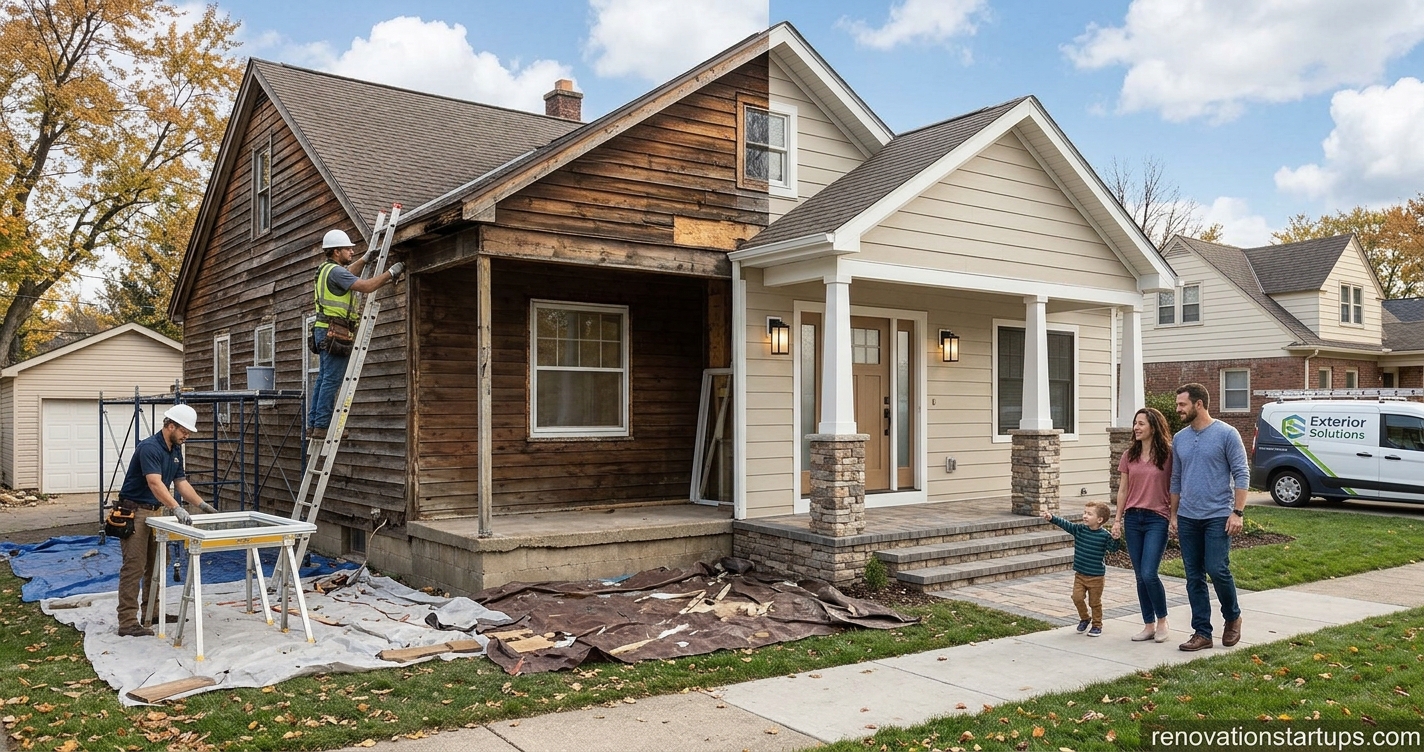
Exterior remodeling means upgrading the outside of your home: siding, roof, windows, doors, insulation and decks. In Canada a single item can cost a few thousand dollars, while a full upgrade runs into tens of thousands. Permit rules depend on your city, so check before you hire anyone.
Ever looked at your house and felt it was ageing faster than you are? I get it. Freeze-thaw cycles, wind-driven rain and long summers of UV all take a toll on the outside of a home. We wrote this guide the way we would explain it over coffee: plain talk, real numbers and no sales pitch. Ready to sort it out together?
What does exterior remodeling include?
Think of your home’s outer shell as one system. Each part protects the others, so the pieces matter together.
Siding and cladding
Vinyl is the budget pick at roughly $6 to $10 per square foot installed. Fibre cement and engineered wood cost more but look sharper and last longer in many cases. Whatever you choose, ask your contractor about the drainage gap behind it. That hidden detail decides how long the wall stays dry.
Roofing
Asphalt shingles on a typical detached house often land between $10,000 and $18,000 in CAD. Metal costs more upfront but sheds snow well. Eavestroughs, soffits and fascia usually get replaced at the same time, since the scaffolding is already up.
Windows and doors
Expect about $800 to $1,500 per window, installed. An entry door is the cheapest way to change how the front of the house feels, and it often pays you back in comfort right away. Look for ENERGY STAR certified products rated for your climate zone.
How much does exterior remodeling cost in Canada?
Prices swing with wall area, material, access and local labour rates. Quotes also move when lumber and steel prices shift, so treat any figure you read online as a starting point.
Picture a 1,500 square foot bungalow with vinyl siding, ten windows and a shingle roof. The roof runs $10,000 to $18,000 and the windows $8,000 to $15,000. Siding on roughly 1,800 square feet of wall at $6 to $10 per square foot adds $10,800 to $18,000. That puts the whole job between $28,800 and $51,000 before insulation or surprises. Big range, I know. That spread is exactly why three written quotes matter.
Adding rigid insulation under new siding typically adds $3 to $10 per square foot. On 1,200 square feet of wall, that is $3,600 to $15,000 on top of the siding itself. Pricey? Yes. But the wall is already open and the labour overlaps, so I would rather you plan for it now than regret it later.
Set aside 10 to 15 percent for surprises. Rotted sheathing hides behind old cladding far more often than anyone likes to admit. In our experience, the homeowners who budget for that surprise are the calmest ones when the old siding comes off.
Why does exterior remodeling start with the building envelope?
Your envelope is everything that separates indoors from outdoors: roof, walls, windows, doors and the air barrier hiding inside them. When one layer fails, the others pay for it.
Here is a scenario we see often. A homeowner replaces drafty windows but leaves the old, damp wall around them. The new glass is fine. The wall keeps leaking air, and the frame starts to rot within a few years. Sound familiar? A blower door test, run by a certified energy advisor, shows where air actually escapes. It usually takes a few hours and costs a few hundred dollars in CAD, which is small next to a siding budget. Test first. Then spend where the leaks are.
Do you need a permit for exterior remodeling?
It depends on where you live. Many Canadian cities do not require a permit for re-shingling with the same material or swapping windows for the same size in the same spot. They often do require one for new decks, resized windows, roof structure changes and switching cladding material, say vinyl to brick. A few cities treat any siding replacement as permit work.
So call your municipal building department first. A permit costs far less than tearing out work an inspector rejects. Skipping one can also complicate an insurance claim or a future sale. Zoning rules still apply even when no permit is needed.
What order should exterior remodeling follow?
Order matters more than most people expect.
Start at the top
Water runs downhill. A new roof protects everything below it, so it goes first.
Do walls and windows together
Siding, insulation and windows share the same wall. Doing them in one go saves labour and avoids reworking the flashing later. Do you really want to cut into brand-new siding next year just to fit a window?
Finish with doors, decks and paint
Paint, stain and caulking need dry weather and steady temperatures to cure properly. Spring to early fall works for most regions of Canada, though contractor calendars fill fast, so ask about winter booking.
Which exterior remodeling trends are worth following?
Mixed materials are everywhere right now: siding paired with stone or wood-look steel accents. Deep teal and traditional blues are returning alongside charcoal and warm neutrals. Dark colours look sharp but absorb heat, so check the manufacturer’s guidance for your product before committing.
Here is my mild opinion: choose durability before colour. Paint can change in a weekend. A wet wall cannot be undone nearly as easily.
Are there rebates for exterior remodeling in Canada?
The federal Greener Homes grant and loan have closed to new applicants. Provincial and utility programs now carry most of the funding, such as Rénoclimat in Quebec or CleanBC in British Columbia. Many require a home energy assessment before any work starts, so book that first or you may miss out. Natural Resources Canada keeps the current federal details, and your province’s energy page lists local offers.
FAQ
How long does a full siding job take?
Often one to three weeks, depending on house size, weather and permit timing. A door or a few windows can be done in days.
Can I do outdoor home upgrades in winter?
Some work, such as roofing, can proceed in cold weather. Painting, caulking and many cladding products have minimum temperature limits, so spring to fall is easier.
Is it worth upgrading the outside before selling?
Usually the entry door, roof condition and tidy siding matter most to buyers. Ask a local realtor what buyers in your neighbourhood notice first.
How do I choose a contractor?
Get at least three written quotes with the same scope. Confirm licensing, insurance and workers’ compensation coverage in your province. Avoid big upfront payments and unusually low bids, which often leave out teardown or flashing.
