Home renovations often involve more than replacing flooring, painting walls, or upgrading fixtures. Larger remodeling projects may require moving heavy structural beams, installing oversized windows, positioning stone countertops, or lifting roofing materials several stories above the ground. These tasks can quickly become challenging when materials are too large or heavy to handle by hand.
Professional contractors rely on specialized lifting and rigging equipment to move materials safely and efficiently. From cranes and chain hoists to lifting slings and spreader beams, the right tools help crews position heavy components while minimizing the risk of property damage and workplace injuries.
Understanding how heavy materials are handled can give homeowners a better appreciation for the planning, equipment, and expertise involved in major renovation projects.
Why Heavy Lifting Requires Careful Planning
Every renovation project presents unique lifting challenges. Unlike new construction sites, where crews may have relatively open access, residential renovations often occur around existing walls, landscaping, neighboring properties, and occupied living spaces.
Before lifting begins, contractors must evaluate several important factors:
- Material weight and dimensions: Large beams, stone slabs, and prefabricated components require equipment capable of supporting their weight and accommodating their geometry.
- Available working space: Narrow driveways, overhead power lines, and nearby structures can restrict crane access and equipment placement.
- Lifting points: Materials must be secured with appropriate attachment points and rigging configurations to prevent slipping, shifting, or damage.
- Ground conditions: Cranes and other lifting equipment require stable support, especially when operating near foundations, excavations, or soft ground.
- Equipment capacity: All lifting devices and rigging components must have sufficient rated capacity for the intended lift, accounting for sling angles and other forces.
For complex lifts, qualified personnel develop a lifting plan that addresses equipment selection, load stability, communication, and potential hazards.
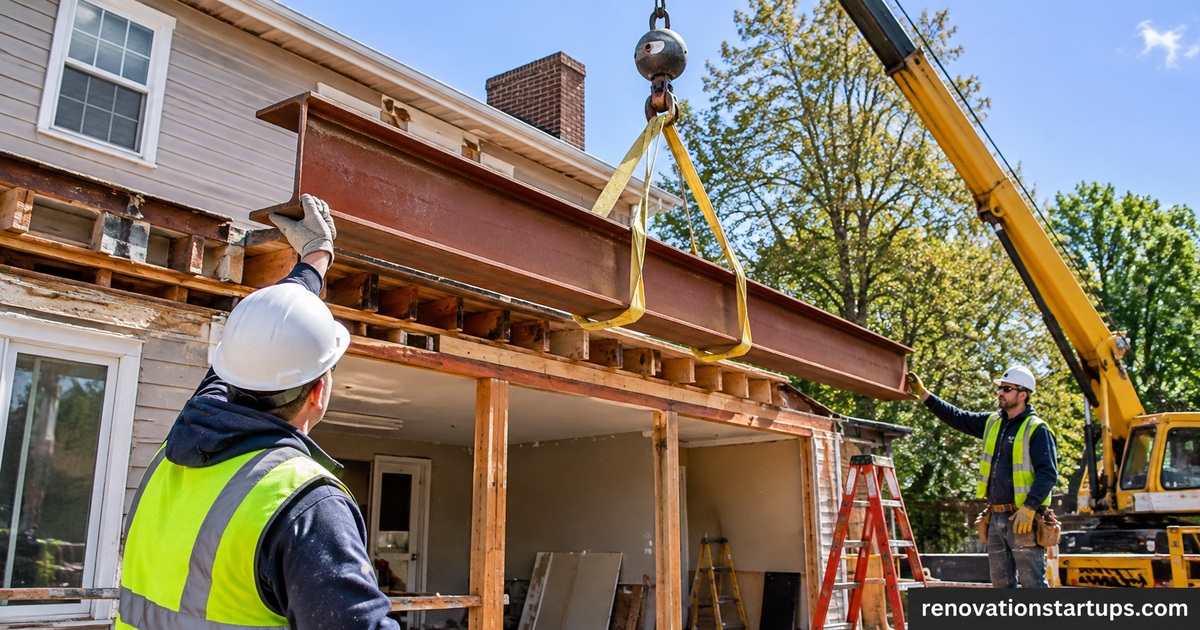
Lifting Structural Steel Beams During Home Renovations
Removing load-bearing walls to create open-concept living spaces is a popular renovation project. However, these modifications often require installing structural steel beams to support the weight previously carried by the removed walls.
Depending on the beam’s size and the home’s layout, contractors may use a compact crane, a portable gantry crane, or a chain hoist to lift and position the steel.
Wire rope slings are commonly used to lift heavy steel components because of their strength and durability. Alloy chain slings are another option, particularly when working with rugged materials or loads that require adjustable attachment configurations.
For certain beam shapes and applications, appropriately rated beam clamps or plate-lifting clamps may also be used, provided they are specifically designed for the intended lifting operation.
In areas with limited overhead access, contractors may use manual chain hoists attached to engineered support systems to gradually raise beams into position.
Once the beam reaches its designated location, workers align it with the supporting columns or bearing points and complete the required structural connections.
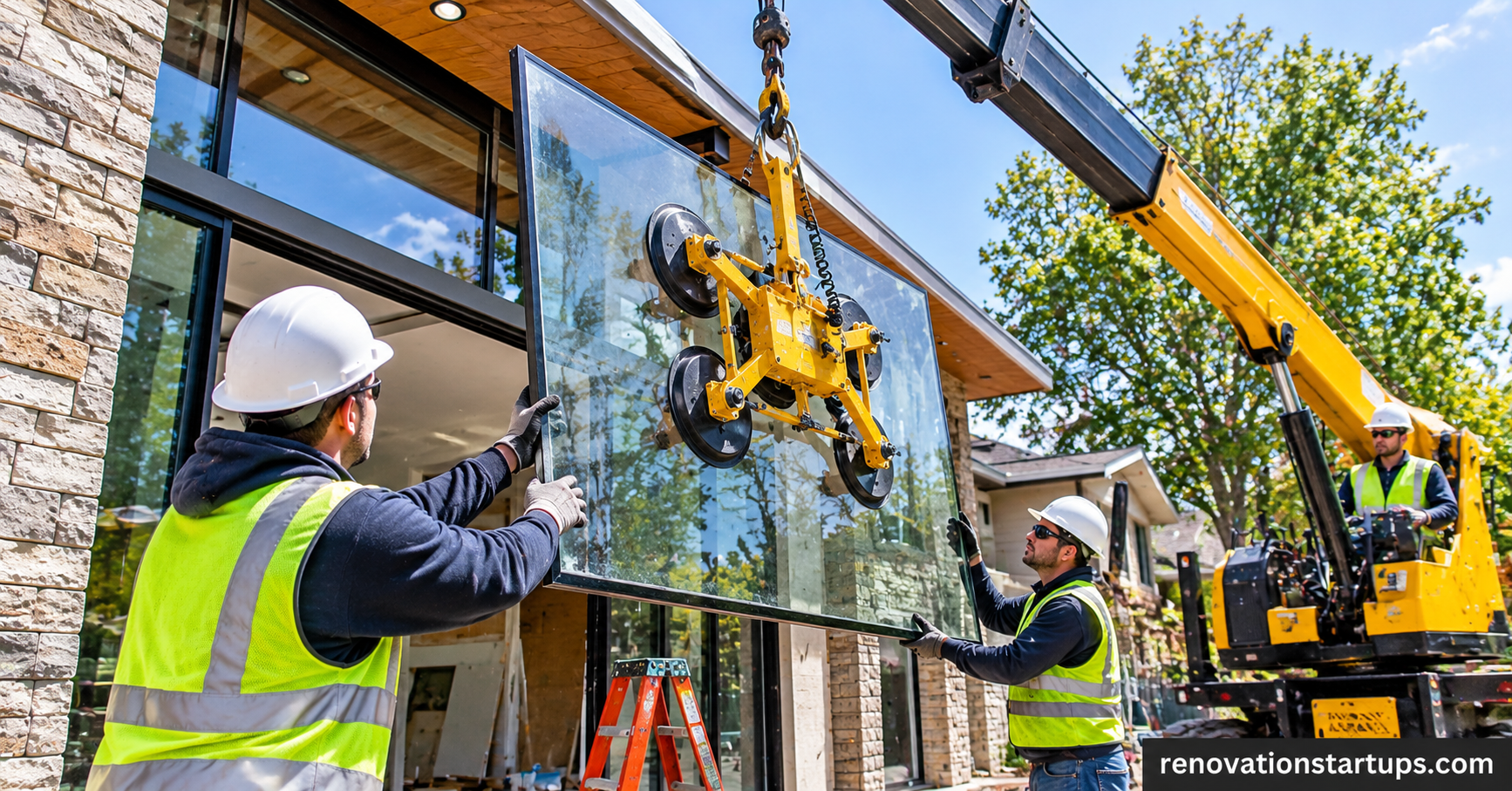
Installing Oversized Windows and Glass Panels
Modern home renovations often include large windows, sliding glass doors, and expansive glass walls. These features bring natural light into living spaces, but their size and fragility make installation especially demanding.
Large glass panels require controlled handling to prevent cracking, edge damage, or sudden shifts during installation.
A commonly used solution is a vacuum glass lifter, a specialized below-the-hook lifting device that uses suction pads to grip glass surfaces. These devices allow trained operators to lift and position glass without relying on conventional slings wrapped around the panel.
Depending on the installation, contractors may combine vacuum lifters with small cranes, compact lifting equipment, or other suitable handling equipment.
For especially large window assemblies, spreader beams can help distribute lifting forces across multiple attachment points. This reduces concentrated loads on components that might otherwise be damaged during handling.
Careful coordination between the equipment operator and the installation crew is essential when maneuvering glass through narrow openings or when positioning it against an existing structure.
Moving Heavy Stone Countertops and Kitchen Islands
Kitchen remodeling projects often include installing granite, marble, quartz, or other engineered stone countertops. Although these materials are valued for their appearance and durability, large slabs can be extremely heavy and prone to cracking if mishandled.
Contractors typically use specialized stone-handling equipment rather than attempting to carry oversized slabs entirely by hand.
Slab-lifting clamps are designed to grip suitable stone materials during lifting and transport. Depending on the application, contractors may also use vacuum lifting systems, lifting frames, and other equipment rated for stone handling.
For moving slabs across floors, machinery skates and heavy-duty dollies can help transport materials across suitable, level surfaces. These tools reduce the need for repeated manual lifting and provide greater control when moving materials through accessible areas.
When positioning a countertop above cabinetry, installers may use specialized lifting aids to support the slab during final adjustments.
Extra attention is necessary around sink cutouts, narrow sections, and unsupported edges, where stone is more vulnerable to damage.
Raising Roof Trusses and Other Roofing Materials
Roof renovations and home additions often require lifting heavy materials to and above ground level. Roof trusses, bundles of roofing materials, and structural framing components can be difficult to position without mechanical assistance.
Mobile cranes and boom trucks are commonly used to lift prefabricated roof trusses into place. Contractors attach the trusses with appropriate synthetic web slings, round slings, or other approved rigging assemblies, following the manufacturer’s lifting instructions.
Long trusses may require multiple lifting points or a spreader bar to maintain stability and prevent excessive bending during lifting.
For bundled roofing materials, contractors may use approved material baskets, lifting platforms, or purpose-built attachments to secure loads during transport.
Once materials reach roof level, workers guide them into position while adhering to appropriate fall protection and load-handling procedures.
Wind conditions are especially important during roof lifts because large trusses and sheet materials can present significant surface areas, making suspended loads difficult to control.
Choosing the Right Rigging Equipment for Residential Projects
The safest lifting method depends on the material being moved, its weight, the available space, and the conditions at the renovation site.
Several types of rigging equipment are commonly used in demanding residential construction and remodeling projects:
- Wire rope slings: Used to lift structural steel, machinery, and other heavy construction components.
- Synthetic round slings: Provide flexible lifting support and, when properly selected, can help protect certain finished surfaces.
- Alloy chain slings: Suitable for rugged lifting applications requiring durable, adjustable rigging configurations.
- Spreader beams and lifting beams: Help manage lifting points and distribute forces when handling long or oversized materials.
- Chain hoists: Enable controlled vertical lifting in locations with a suitable engineered support system.
- Lifting clamps: Provide specialized gripping solutions for compatible steel plates, beams, or stone slabs.
- Shackles: Connect compatible slings, lifting devices, and attachment points as part of a rated rigging assembly.
Each component must be selected based on its working load limit, intended application, and the manufacturer’s instructions. Contractors should also inspect lifting equipment before use and remove damaged or unsuitable components from service.
Protecting the Home During Heavy Lifting Operations
Heavy lifting during a renovation requires protecting not only the workers handling the load but also existing walls, flooring, windows, landscaping, and structural elements, which can all be affected if materials are moved without proper preparation.
Contractors often designate lifting zones to keep homeowners and other workers away from suspended loads. Protective coverings may be installed over finished floors, and temporary barriers can help prevent accidental contact with surrounding surfaces.
When moving materials indoors, crews must also consider doorway clearances, turning space, floor load capacity, and the structural suitability of any temporary lifting supports.
Clear communication among equipment operators, riggers, and installation crews helps ensure materials move in a controlled manner. Workers should never stand beneath suspended loads, and only qualified personnel should direct or perform specialized lifting operations.
Final Thoughts
Major home renovations often rely on lifting operations that homeowners rarely see or consider during the planning stages. Whether installing a structural steel beam, positioning an oversized glass panel, or raising roof trusses, moving heavy materials requires the right combination of equipment, planning, and professional expertise.
Specialized tools such as wire rope slings, chain hoists, lifting clamps, and spreader beams enable the handling of challenging materials with greater precision and control.
For homeowners planning substantial renovations, working with contractors who understand proper lifting and rigging practices can help protect the property, reduce unnecessary delays, and promote a safer construction process.
