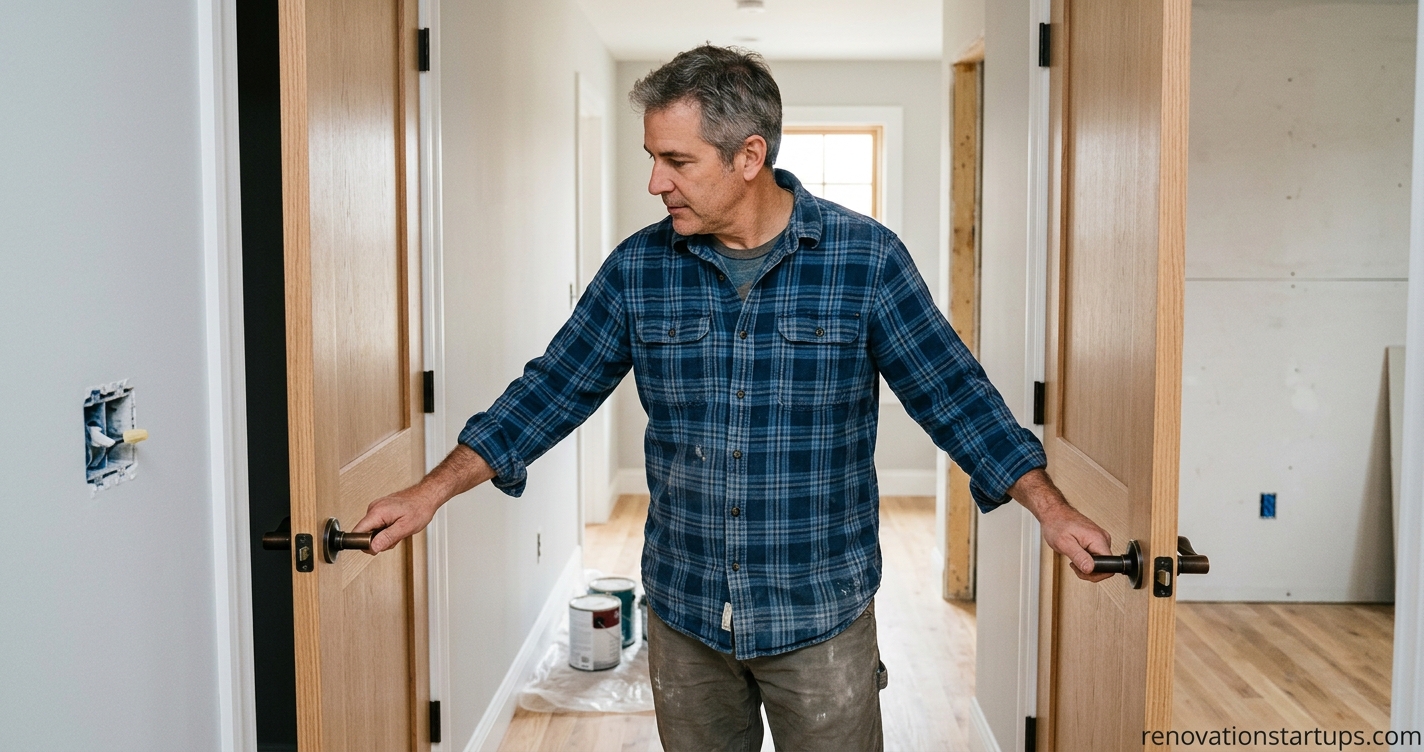
The difference in a right hand vs left hand door comes down to hinge position. Face the door from the outside. Hinges on the right make it a right-hand door. Hinges on the left make it a left-hand door. The direction the door opens adds a second label of inswing or outswing. An exterior door order needs both.
What Is Door Handing?
Door handing is the system for describing which side a door is hinged on and which way it swings. Hardware makers and door manufacturers rely on it. The hand a person uses to open the door has no bearing on the label. A right-handed person can own a left-hand door without trouble.
The label matters because hinge mortises and lockset bores are cut for one hand. A prehung door arrives with them already machined. Some hardware is handed too. A lever that curves downward on one hand curves upward on the other and looks wrong. The right hand vs left hand door decision therefore has to be settled before ordering. A wrong call on a custom door is an expensive mistake.
Suppliers do not share one convention. Some describe interior doors from the side the door swings toward. Others use the hallway. One bedroom door can therefore carry either label depending on the catalogue. A plain description avoids the mix-up. Saying that the hinges sit on the right from the hallway and the door opens into the room leaves no doubt.
How Do You Tell a Right Hand vs Left Hand Door Apart?
Three quick checks settle it.
Step 1: Stand on the outside
For a front door the outside is the porch or step. For an interior door it is the hallway or whichever side a person approaches from. A bathroom that opens off a bedroom has the bedroom as its outside. An easy slip is reading the hinges from inside the house.
Step 2: Read the hinge side
Note which edge carries the hinges. The knob or lever sits on the opposite edge. Left hinges make a left-hand door and right hinges make a right-hand door.
Step 3: Note the swing
A door that opens away from you is an inswing. A door that opens toward you is an outswing. Then run a cross-check. Open the door and stand with your back against the hinge jamb. If the door swings to your left it is left-hand. This check agrees with the outside method for inswing doors. Suppliers disagree on how to name outswing doors.
What Is the Difference Between Inswing and Outswing Doors?
Every exterior door has a hand and a swing. Together they give four combinations. A left-hand inswing and a right-hand inswing both open into the house. Their outswing counterparts open toward the person outside. A right hand vs left hand door order should also list rough opening size and jamb depth.
Inswing doors
Most front doors in Canadian homes open inward. Installers in Ottawa usually cite snow because a drift can block an outward door. Inswing doors also hide their hinges from the street and accept a storm door. The cost is floor space indoors and less resistance to wind-driven rain. For most houses that makes inswing the sensible default.
Outswing doors
Wind presses an outswing door tighter against its stop. The hinges sit outside so they need tamper-resistant designs or fixed pins. Heavy snow can block the door and a standard storm door will not fit. One Ottawa-area supplier reports that about 5 per cent of its entry door orders are outswing.
What Do Reverse Handing and Active Leaf Mean?
Commercial suppliers add the word reverse to a hand when the door opens toward the viewer. A left-hand reverse door has hinges on the left and swings outward toward the person standing outside. Residential retailers usually skip the term and say outswing instead.
A pair of doors adds the active leaf. This is the panel used for daily entry and exit. The other leaf usually stays secured with flush bolts until needed. A French door order should say which leaf is active plus the hinge side and swing of both panels.
What Does the Building Code Say About Door Swing?
Provincial codes grow out of a national model code and differ in detail. The Ontario Building Code offers a clear example. Exit doors that must swing shall swing in the direction of exit travel. Doors serving a house or an individual dwelling unit are excepted. So is a room or floor area with an occupant load of 60 persons or fewer. That is why a family home can use an inswing front door.
Codes rarely care about a right hand vs left hand door choice. One corridor rule is an exception. Where a pair of doors sits in a corridor with exits in both directions the doors swing in opposite directions. The door on the right swings in the direction of exit travel. A newer edition of the national model code has been published. Provinces adopt new editions in stages so a project may fall under either one. The local building department has the final word.
Does Door Handing Affect Handles and Locks?
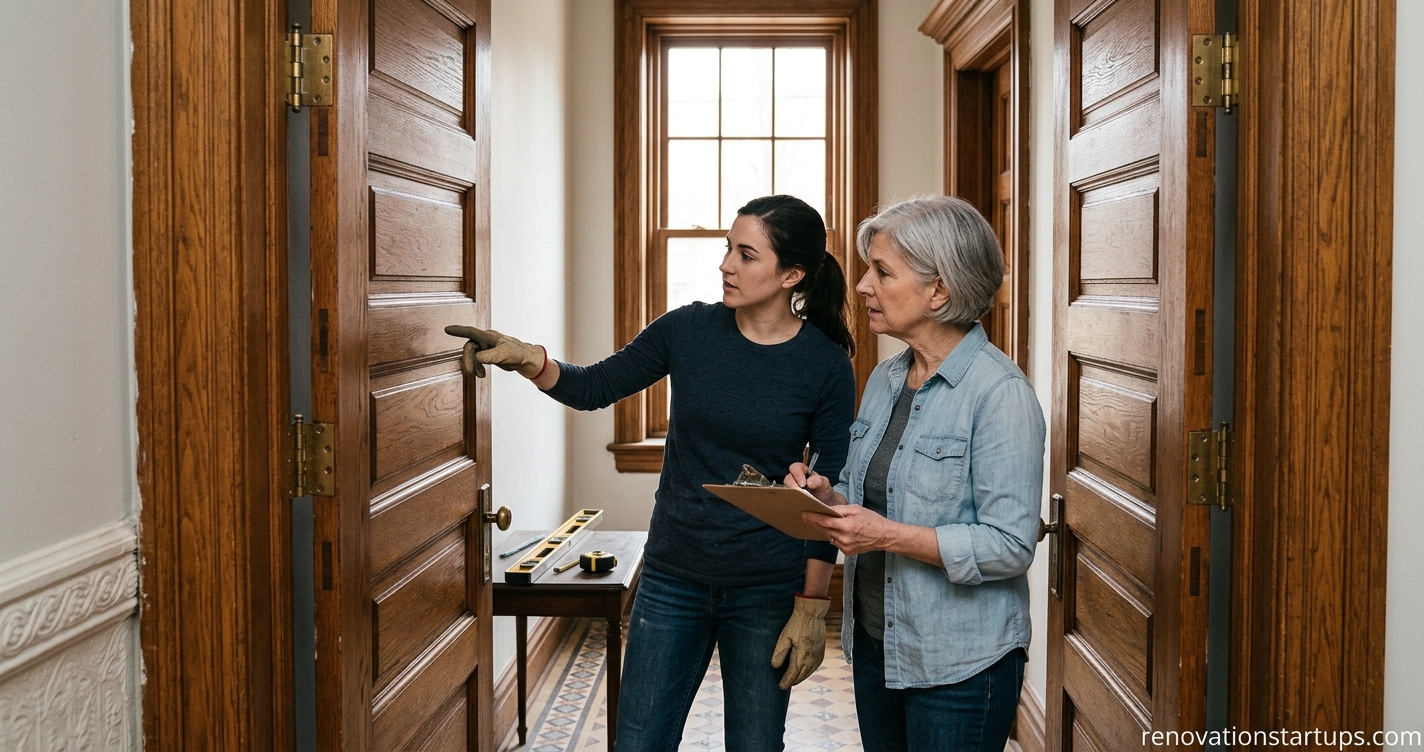
Sometimes. Plain knobs and deadbolts usually suit either hand. Levers and handlesets often do not so a right hand vs left hand door can need mirror-image hardware. One retailer offers a handy rule for exterior sets. The interior lever points toward the hinges when viewed from inside the house. The same source adds that a right-hand inswing door and a left-hand outswing door take the same handleset. Some sets are reversible so check the packaging before assuming. A photo of the existing handleset and the hinge edge helps a supplier confirm the hand.
Which Hand Suits a New Door Opening?
Placement usually decides a right hand vs left hand door question for a new opening. Hinge the door on the side nearest a perpendicular wall so the open leaf rests flat against it. Switches normally sit on the latch side so a wrong hand hides one behind the open door. Tracing the swing arc on a floor plan also catches vanities and toilets.
FAQ
Is a left hand door hinged on the left?
Yes. Viewed from the outside a left-hand door has its hinges on the left. Some suppliers use the swing side as the viewpoint so confirm before ordering.
What is a right hand inswing door?
It has hinges on the right when seen from outside and it opens into the house. A left-hand inswing is the mirror image.
Can you change a right hand door to a left hand door?
A slab door can be hung on either side since the installer cuts the hinge mortises. A prehung unit is built for one hand. Reversing it means moving the hinges and strike plate. Ordering the correct hand is usually simpler.
Should a front door open in or out?
Inward is the usual choice for a Canadian house because of snow and storm doors. Outward suits homes short on interior space or exposed to strong wind. Either way the right hand vs left hand door question still needs an answer.
