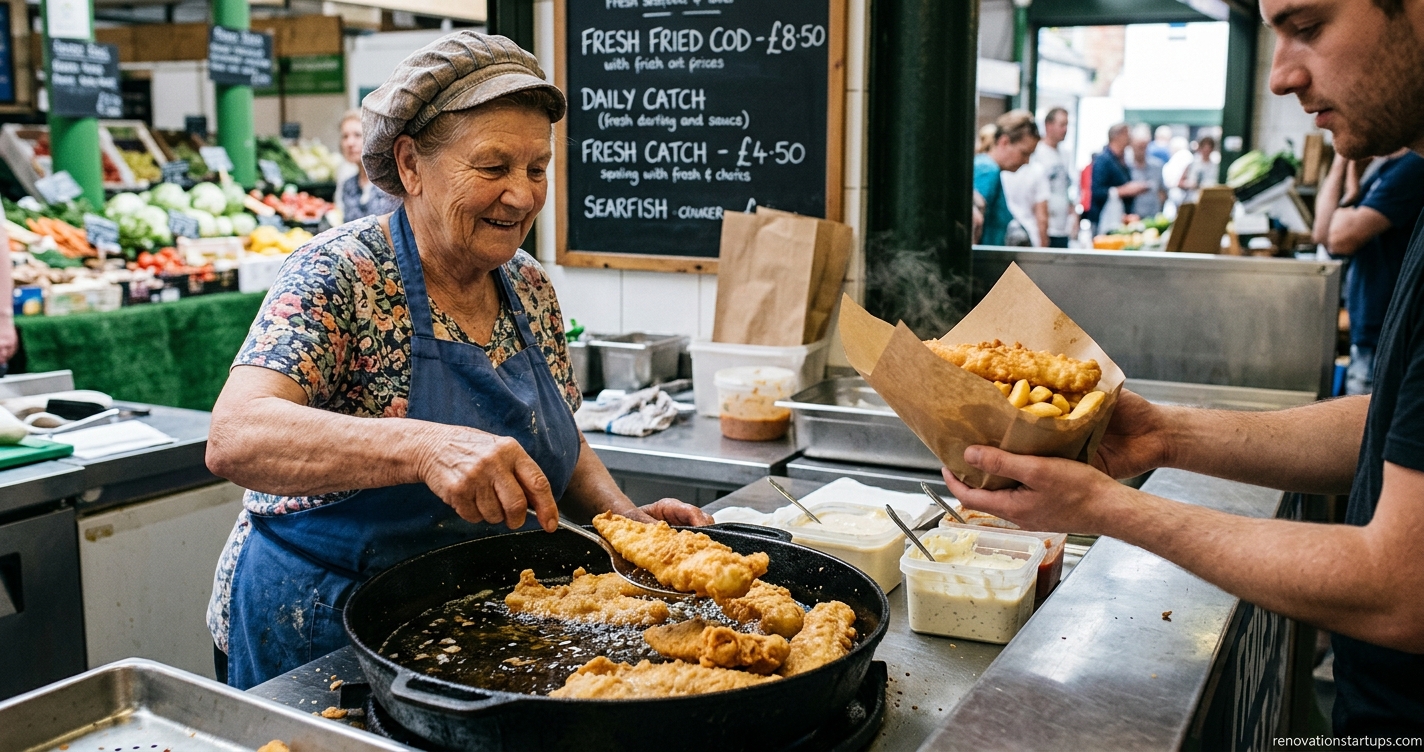
Fried fish is fish coated in flour, batter, or breadcrumbs and cooked in hot oil until the outside turns golden and the inside stays moist. Getting there consistently comes down to three things: dry fish, hot oil, and a thermometer instead of guesswork. In our experience testing this in a home kitchen with a basic cast-iron pan, the crust holds up far better when the fish is patted bone-dry before it ever touches flour.
What Makes Fish “Fried” Instead of Just Cooked in Oil?
The line between sautéed fish and true fried fish comes down to coating and oil depth. A sauté uses a small splash of oil and no coating at all. Frying, whether shallow in a skillet or deep in a pot, relies on a dry coating that seals moisture inside while the surface crisps in hot fat. That coating is also why it holds heat longer after cooking than a plain grilled fillet, which cools within a minute or two of leaving the pan.
The oil itself does more work than most people assume. Once a fillet hits oil above roughly 160°C, the surface moisture flashes to steam almost instantly, pushing the coating away from the flesh and creating that gap of crisp texture. Oil that’s only lukewarm just sits there, soaking into the coating instead of crisping it.
Which Fish Works Well for Frying?
Firm, mild whitefish holds together in hot oil without falling apart. Oily or very soft fish tends to break during flipping.
Common Choices Across Canada and the U.S.
- Cod – the classic choice for fish and chips, mild and flaky.
- Haddock – slightly sweeter than cod, common on the East Coast.
- Walleye – widely caught and pan-fried across Ontario and the Prairies, prized for its clean flavour.
- Catfish – a Southern U.S. staple, usually coated in cornmeal rather than flour.
- Tilapia – thin and inexpensive, cooks in under four minutes per side.
A 150-gram fillet, roughly one centimetre thick, is the size most home cooks land on without meaning to, and it happens to be close to ideal for even cooking.
Fresh or frozen both work fine, and frozen is often more consistent since it’s typically flash-frozen at sea within hours of the catch. Look for firm flesh that springs back under light pressure and a clean, mild smell rather than anything sharp or ammonia-like. If working from frozen, thaw fillets overnight in the refrigerator rather than on the counter, and pat them dry thoroughly once thawed, since frozen fish tends to release more surface moisture than fresh.
How Do You Fry Fish So It Stays Crispy?
A soggy crust is almost always a moisture problem, not a technique problem.
Steps That Actually Matter
- Pat the fillet dry with paper towel until there’s no visible sheen.
- Season, then dredge in flour or cornmeal, pressing it on and shaking off anything loose.
- Heat the oil first, before the fish goes anywhere near the pan.
- Fry in batches of two or three fillets at most in a standard 30-centimetre skillet; crowding drops the oil temperature fast.
- Flip once, using a thin metal spatula, and drain on a wire rack rather than paper towel, which traps steam underneath and softens the bottom crust within minutes.
Skip step three and the fish sticks. Skip step five and a perfectly crisp piece of fried fish turns limp in the time it takes to plate the rest of dinner.
What Oil Should You Use to Fry Fish?
Oil choice matters more than most recipes admit, mainly because of smoke point and cost.
Options Worth Comparing
- Canola oil – neutral, widely available in Canada, and priced around four to six dollars a litre depending on the brand.
- Peanut oil – handles high heat well and is a common choice for deep frying, though it costs more.
- Sunflower oil – light in flavour, a reasonable middle ground.
Extra-virgin olive oil is not a good fit here. It smokes at a lower temperature than the others and turns bitter well before the fish is done cooking.
What Temperature Is Safe for Frying Fish?
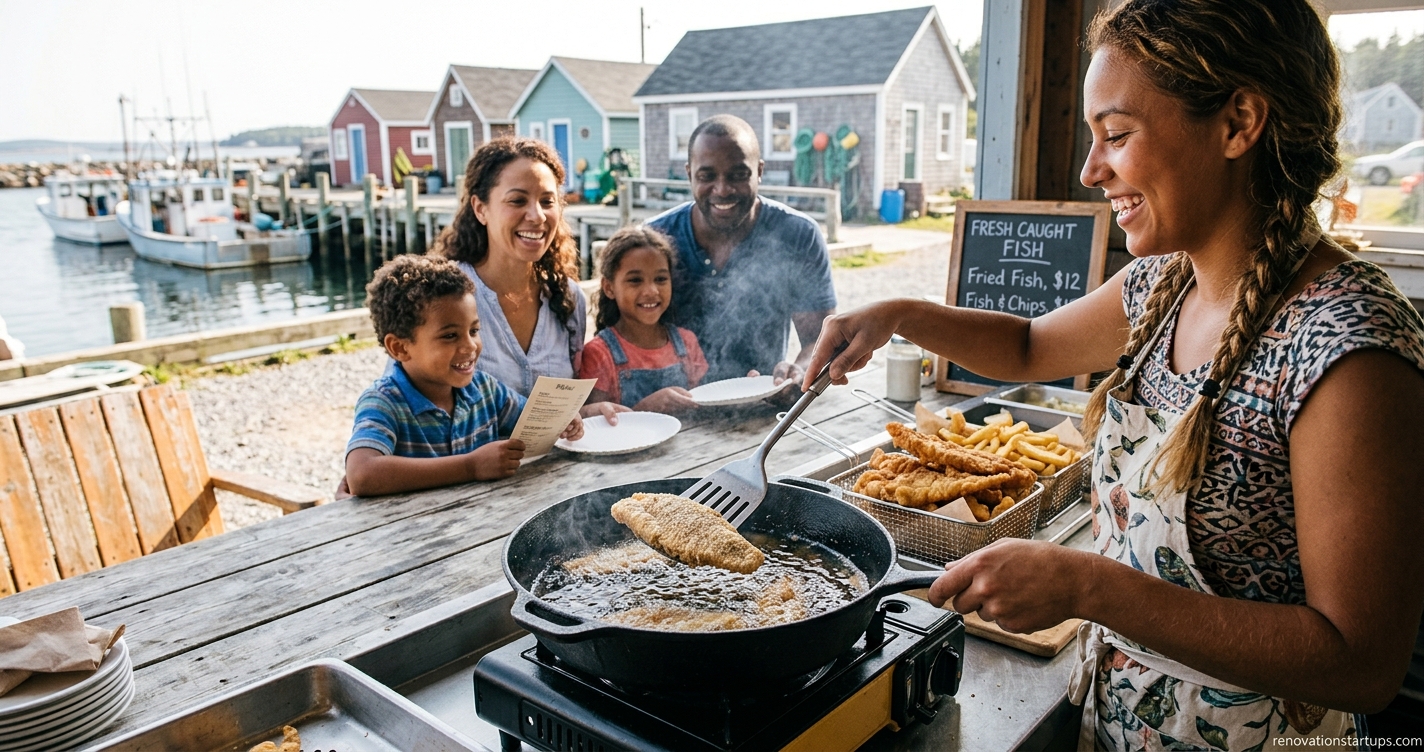
Colour is not a reliable way to judge whether fish is cooked through, since a golden crust can form before the centre reaches a safe temperature. Health Canada lists 70°C (158°F) as the minimum internal temperature for cooked fish, a standard set out on Canada.ca’s food safety pages. A digital probe thermometer inserted into the thickest part of the fillet is the only way to confirm this without cutting the fish open and losing juices. Oil temperature matters separately: 175 to 190°C (350 to 375°F) is the working range for deep frying, checked with the same thermometer before the first batch goes in. A cheap eight-dollar candy or deep-fry thermometer clipped to the side of the pot does the job just as well as a probe model, and it removes the guesswork of dropping a bread cube in and eyeballing it.
Fried Fish vs Baked Fish: Which Is Healthier?
Baked fish uses little to no added fat, while a coated, pan-fried fillet absorbs oil during cooking, adding calories that vary by coating thickness and oil temperature. A thin, well-drained crust picks up noticeably less oil than a heavy batter left in slightly cooler fat. Fish itself, whichever way it’s cooked, remains a solid source of protein and omega-3 fatty acids. For someone watching fat intake closely, an air fryer set to roughly 200°C for ten to twelve minutes gets close to the crunch of pan frying with a fraction of the oil.
Frequently Asked Questions
Why is my fried fish soggy instead of crispy?
Usually because the fish wasn’t dried thoroughly before coating, the oil wasn’t hot enough when the fish went in, or it was drained on paper towel instead of a wire rack.
What is the difference between fish and chips and regular fried fish?
Fish and chips specifically uses a wet batter, often made with cold sparkling water or beer, fried in deep oil and served with fries. Other methods use a dry dredge of flour, cornmeal, or breadcrumbs and can be pan-fried in far less oil, which is closer to what most home cooks make on a weeknight.
Can you fry fish without flour?
Yes. Cornmeal, crushed crackers, panko breadcrumbs, or even crushed cornflakes all work as coatings, and some cooks skip a coating entirely and rely on a very hot, well-oiled pan, though the crust will be thinner and less durable when flipped.
