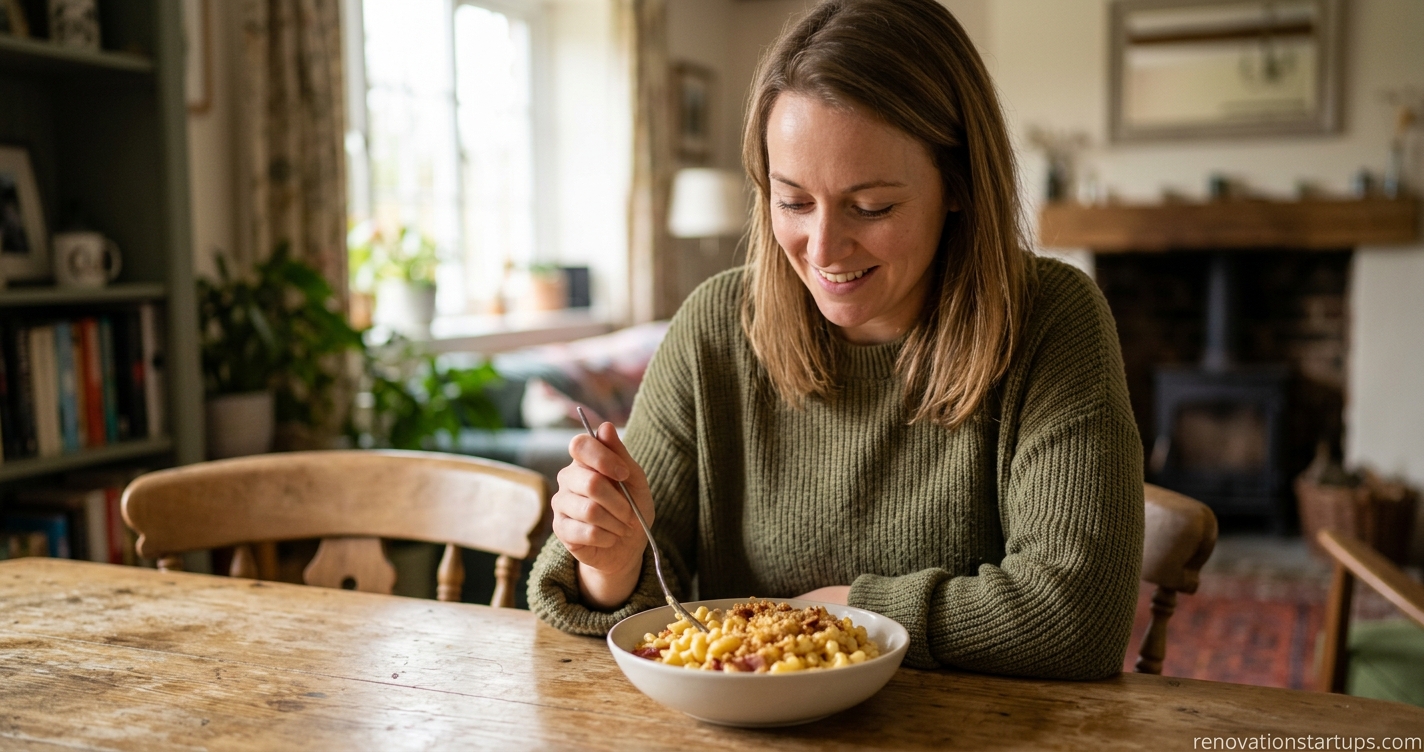
Comfort food is any dish that provides emotional reassurance along with physical nourishment, usually because it feels familiar, easy to make, and tied to a specific memory of home, family, or celebration. There’s no fixed list. A bowl of dal, a plate of poutine, and a grilled cheese sandwich can all qualify, depending entirely on who’s eating it and what that dish means to them.
What Is Comfort Food?
Comfort food picked up a formal dictionary definition in the late 1990s: food that comforts or provides consolation, often because it’s high in sugar or carbohydrates and connected to childhood or home cooking. That definition still holds up, though the real explanation runs deeper than any dictionary entry can capture.
In our experience talking with home cooks across Ontario and Quebec, no two people name the same dish, even within one family. One person reaches for Kraft Dinner eaten straight out of the pot. Another wants their bubbie’s chicken soup, made exactly the way she made it forty years ago. What connects these choices isn’t the ingredient list. It’s familiarity, low effort, and a direct line back to memory. Ask five people to describe theirs and you’ll get five different answers, all of them correct.
A study published in the journal Appetite found that identical dishes could feel soothing to one person and unpleasant to another, depending entirely on that person’s history with the food. The craving, then, is personal by definition, not a fixed menu anyone can hand you.
Why Do We Crave Comfort Food When We’re Stressed?
Stress pushes the brain toward whatever feels safest and requires the least thinking. A familiar dish demands no decisions, carries no risk of disappointment, and delivers a hit of dopamine and serotonin the moment it hits your tongue. That’s basic brain chemistry, not bad behaviour.
A few things drive the craving specifically:
- Reward response: familiar meals trigger the same brain chemistry linked to pleasure and calm
- Decision relief: choosing a known dish removes the mental load of deciding what to eat during a hard week
- Physical grounding: warm, soft, or creamy textures can mimic the sensation of being cared for
- A sense of control: picking what to eat restores a small piece of agency when everything else feels unpredictable
None of this means the habit is a permanent fix. Leaning on familiar dishes constantly, instead of occasionally, has been linked to worse outcomes over time. The difference between a helpful pattern and an unhelpful one usually comes down to frequency and awareness, not the dish itself.
What Are Examples of Comfort Food in Canada?
Canadian regional cooking carries a strong emotional signature, shaped by cold winters, French and British colonial history, Indigenous food traditions, and generations of immigration. A few dishes show up again and again.
Poutine and Tourtière
Poutine, crispy fries topped with cheese curds and hot gravy, traces back to rural Quebec in 1957, when a restaurant owner combined fries and curds after a customer’s request. It has since spread across the country, with versions that add pulled pork, smoked meat, or braised short rib. Tourtière, a spiced meat pie, sits at the centre of Christmas and New Year’s tables in Quebec, carrying the same emotional weight that turkey dinner holds elsewhere in the country.
Butter Tarts and Nanaimo Bars
Butter tarts, a small pastry filled with butter, sugar, and egg, show up at nearly every bake sale and holiday gathering in Ontario. Nanaimo bars, a no-bake layered dessert from British Columbia, do the same job on the west coast. Neither needs an occasion. Both just need a craving.
Fish and Brewis in Atlantic Canada
In Newfoundland, fish and brewis, salt cod soaked and cooked with hardtack, remains a staple built directly from the region’s fishing history. It’s proof that a soothing dish doesn’t need to be fancy or sweet. Sometimes it just needs to taste like home.
Is Comfort Food Healthy or Bad for You?
Neither answer is honest on its own. This category of food isn’t automatically unhealthy, and it isn’t automatically fine in any amount either. Dietitians of Canada generally frames the question around pattern rather than any single meal: what matters is what your plate looks like across a week or a month, not what happened on one hard Tuesday.
Many classic dishes in this category run high in sodium, saturated fat, and refined carbohydrates, and eating them daily can add up. At the same time, sharing a meal like this with family, cooking it from scratch, or using it to mark a celebration carries real value that a spreadsheet of nutrients won’t capture. Food is more than fuel, and pretending otherwise doesn’t help anyone eat better over the long run.
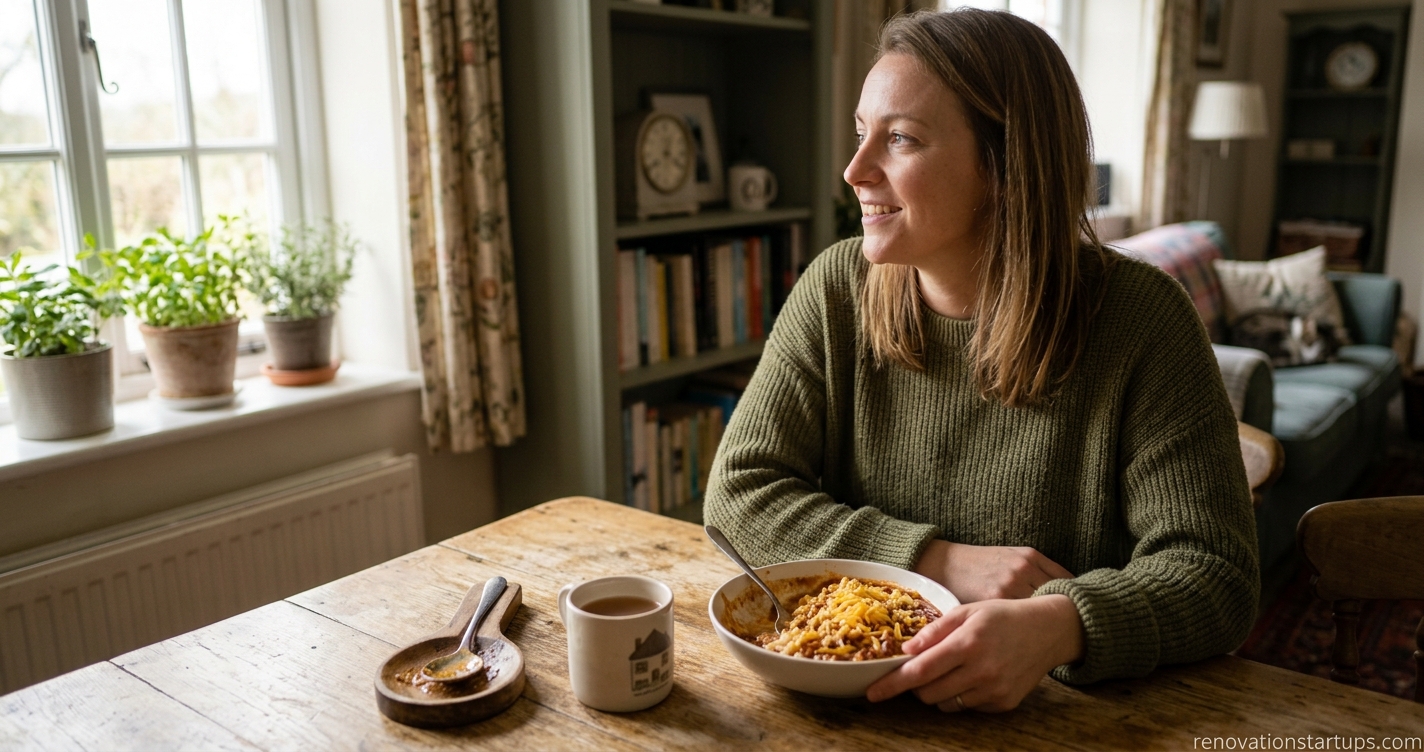
How Can You Make These Dishes Healthier?
You don’t need to give them up to eat well. A few small changes tend to make the biggest difference:
- Cook from scratch when time allows, so you control the sodium and added sugar
- Add lentils, beans, or extra vegetables to stews, casseroles, and pasta bakes
- Swap heavy cream for a good stock in soups where the flavour still holds up
- Pair a rich dish with a simple side salad instead of trying to change the dish itself
- Slow down while eating it, since a meal eaten quickly out of stress tends to leave people less satisfied than the same dish eaten with attention
This kind of eating isn’t going anywhere, and it shouldn’t have to. It’s one of the oldest, most human responses to a hard day, tied to memory, family, and a plate of something warm. The goal isn’t to eliminate it. It’s to notice why you’re reaching for it, and let it stay one part of how you take care of yourself rather than the whole plan. A cold January night or a homesick moment far from home can bring the same dish back into rotation, and that’s exactly how it should work.
FAQ
What Is the Most Popular Comfort Food in Canada?
Poutine holds that title nationally, though butter tarts and tourtière come close, especially during the holidays. Regional favourites shift depending on where in the country you ask.
Why Do We Crave a Familiar Dish When We’re Sad?
Sadness and stress push the brain toward familiar choices that need no decision-making and trigger a release of dopamine and serotonin. Craving a favourite dish during a hard moment is a normal response, not a sign that something is wrong with you.
Is Comfort Food the Same as Junk Food?
Not exactly. Junk food describes nutritional content, while this describes an emotional relationship with a dish. A bowl of homemade soup or a plate of dal can carry all of that emotional weight without qualifying as junk food at all.
Can These Dishes Be Part of a Healthy Diet?
Yes, in the same way any dish can fit into a healthy diet when the overall pattern of eating stays balanced. Portion size, frequency, and what else is on the plate over a week matter more than labelling any single meal good or bad.
