
Built-up roofing, usually shortened to BUR, is one of the oldest flat-roof systems still protecting commercial buildings across Nebraska. Many warehouses, office buildings, and older industrial properties in Omaha, Lincoln, and along the Missouri River corridor still carry a BUR system, and some of those roofs are decades old. Whether yours is holding up or quietly failing depends on a handful of conditions that a proper inspection can identify.
This guide explains what BUR is, how it is built, how Nebraska weather affects it, and how to decide between repair, recovery, and full replacement.
What Is Built-Up Roofing (BUR)?
BUR is a multi-ply roof assembly for flat and low-slope roofs. Alternating layers of bitumen and reinforcing felts (plies) are bonded together over a roof deck, then finished with a protective surface such as gravel or a smooth cap sheet. It has been used for over a century, and the basic principle is simple: more plies generally mean a stronger, longer-lasting roof.
The mass of a multi-ply system is part of its appeal. When it is well built and maintained, BUR handles freeze-thaw cycling well, and a gravel surface shields the bitumen from UV exposure while offering some protection from hail. Some Omaha buildings roofed in the 1960s and 1970s are reported to still be watertight today, which shows what a well-maintained system can do.
Types of Built-Up Roofing
The main difference between BUR systems is the binder used between the plies.
- Coal tar BUR: Very durable and resistant to harsh weather, but its use may be restricted by environmental regulations.
- Asphalt BUR: More widely available and generally more affordable, and still strong, though slightly less durable than coal tar. It can also face environmental restrictions.
Typical systems use three to five plies. Because Nebraska swings from hot summers to freezing winters, with hail and strong winds in between, local roofers often recommend more plies for maximum durability.
How a BUR System Is Installed
A typical installation follows this sequence:
- A waterproofing layer or base sheet goes directly over the roof deck, sometimes over insulation.
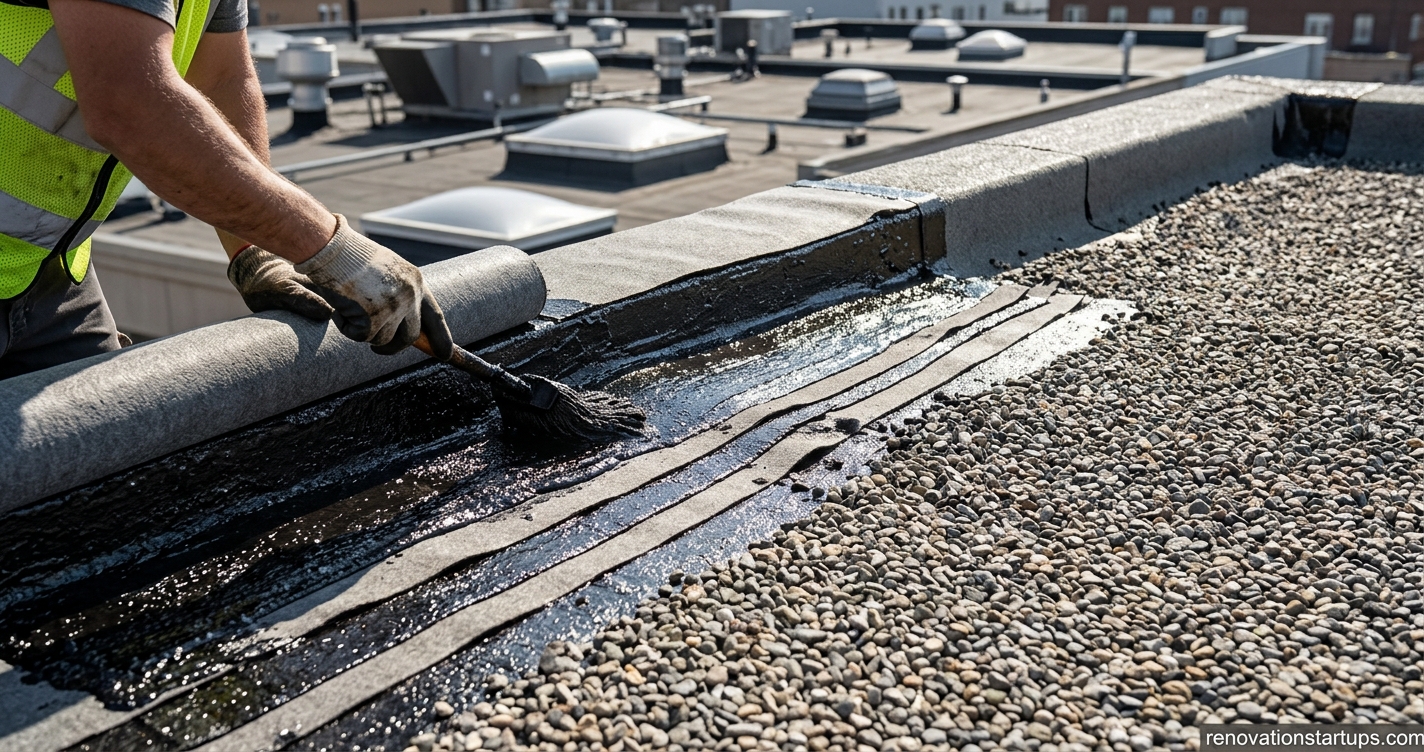
- Multiple plies of fiberglass or roofing felt are bonded with hot asphalt or coal tar.
- A flood coat of bitumen is applied over the top plies.
- The surface is finished with gravel, a clear glaze, or a modified bitumen cap sheet. Some roofs also receive an aluminum coating to extend service life.
More modern specifications often combine a base sheet, two intermediate felts, and a modified bitumen cap sheet, creating a four-ply system suited to Nebraska’s climate.
Advantages and Drawbacks
Advantages
- Long service life when maintained
- Strong weather resistance and freeze-thaw performance
- UV protection and some hail resistance from gravel surfacing
- Sound attenuation, which can matter near rail or freight corridors
- Many repair and recover options for aging systems
Drawbacks
- UV sensitivity: Sun exposure can crack exposed bitumen, especially on smooth-surfaced roofs that have lost their protective coating.
- Installation odor: Bitumen and adhesives produce a strong smell during installation.
- Weight: BUR is heavier than most single-ply systems and may require structural support.
- Maintenance: It needs periodic roof inspections and repairs to reach its full lifespan.
How Nebraska Weather Affects BUR
Nebraska is hard on flat roofs. Summer heat softens and oxidizes bitumen, sub-zero winters stress the membrane, and repeated freeze-thaw cycling opens small cracks that let water in. Hail can bruise the surface, and wind can lift loose flashing.
Parapets deserve special attention. Brick parapets move noticeably with temperature changes, which can crack and pull away the stripping plies used as flashing. Water then enters at every crack. For many older BUR roofs, parapet flashing repair is one of the most cost-effective maintenance tasks you can do.
Reading a BUR Roof’s Condition
A professional assessment usually starts with a roof walk, noting visible defects, ponding locations, drain function, and flashing condition at parapets and penetrations. Common signs include:
- Alligatoring: Oxidized surface bitumen cracks in a pattern that resembles alligator skin. On its own it does not mean the plies below have failed, but it lets UV reach them. If the plies are intact, a flood coat with new gravel or a fluid-applied coating can stop further damage.
- Ridging: Felts absorb moisture and expand, pushing ridges up through the surface. Isolated ridges can often be cut, dried, and patched. Widespread ridging points to systemic moisture in the plies.
- Blistering: Trapped moisture or volatile compounds form pockets under the surface ply. Intact blisters can often be cut, dried, and back-mopped. Widespread blistering suggests installation defects or moisture intrusion, and open blisters need ply repair plus surface treatment.
- Flashing failure: Cracked or detached stripping plies at parapets and penetrations are a leading source of leaks.
- Ponding water: Standing water accelerates bitumen degradation and is a sign to inspect drains and drainage.
- Wet insulation: Often invisible from the surface. Moisture core pulls and, in some cases, infrared roof scanning are used to find it.
Where deck deterioration is suspected, inspection ports at suspect locations can confirm the condition below the plies. A written condition report then gives the owner what is needed to make a capital decision.
Repair: When Targeted Work Is Enough
If the plies are intact, the insulation is dry, and the surfacing is repairable, targeted repair and surface maintenance are usually the right call. Typical BUR repair work includes:
- Replacing flashing at parapets and penetrations
- Repairing blisters, including cutting, drying, and back-mopping
- Routing and filling cracks
- Reinforcing seams
- Applying a flood coat and new gravel, or a fluid-applied coating
- Inspecting and clearing drainage
One Omaha contractor estimates targeted repair on a roof of roughly 20,000 to 30,000 square feet at two to five days, depending on scope. Treat that as one contractor’s estimate, not a rule, since access, permitting, and roof condition all change the schedule.
Recover: Adding a New Surface Over BUR
A recovery installs a new membrane over the existing roof instead of tearing it off. A common approach on aging BUR is a modified bitumen cap sheet, applied by torch or cold-applied adhesive over the existing surface after the gravel is embedded in a flood coat. Contractors report this can extend the roof’s life by 15 to 20 years without a full tear-off.
SBS (styrene-butadiene-styrene) modified bitumen is generally favored in cold climates because its elastomeric modifier stays flexible at sub-zero temperatures. APP (atactic polypropylene) sheets are stiffer in the cold and are installed with an open flame, which carries added hazards. Torch-applied work is typically limited to crews with the right regional certification.
A recover only works under the right conditions:
- The insulation is dry, confirmed by moisture core pulls
- The deck is sound
- The plies are intact
Skipping the core pulls is the classic mistake. A new cap sheet over wet insulation traps moisture, can void a warranty, and speeds up deterioration of the system underneath. Where cores show wet insulation, those sections should be removed and replaced before the new membrane goes down.
Replacement When Recovery Is Not the Right Call
Replacement becomes the sensible option when moisture is widespread, the deck is deteriorating, or plies are delaminating at scale. Contractors often use rules of thumb such as ridging across more than about 20% of the roof, or insulation saturation across more than about 25%, as signals that a recovery will not hold up. These are guidelines, not universal standards, so ask your contractor to show the core results behind the recommendation.
On BUR, a full tear-off means removing the plies, interply bitumen, insulation, and sometimes the deck. It generates heavy debris, so the building’s structural capacity should be checked before staging dumpsters or materials on the roof.
Owners then choose a replacement system:
- A new four-ply BUR: Preferred by some owners for durability or sound attenuation.
- Mechanically attached TPO over polyiso insulation: Lighter and faster to install.
- Other membranes: EPDM, PVC, and modified bitumen are also common on flat commercial roofs, depending on the building, budget, and performance needs.
The right choice depends on slope, drainage, insulation needs, energy goals, and maintenance expectations.
Repair, Recover, or Replace? A Quick Comparison
| Condition | Likely direction |
| Intact plies, dry insulation, localized defects | Repair and surface maintenance |
| Alligatored surface with sound plies below | Flood coat and gravel, or a fluid-applied coating |
| Aging roof, dry insulation, sound deck | Modified bitumen cap sheet recover |
| Wet insulation in limited areas | Remove and replace wet sections, then recover |
| Widespread saturation, deck damage, or large-scale delamination | Full tear-off and replacement |
Roof age alone does not decide the answer. A 30-year-old BUR with dry insulation and intact plies can still be a good recovery candidate, while a younger roof with saturated insulation may not be.
Seasonal and Practical Considerations in Nebraska
Hot-mopped BUR and torch-applied modified bitumen need warm enough substrate temperatures, with about 40°F cited as a minimum for proper adhesion. Cold-applied bituminous materials can be used at lower temperatures, which is why emergency temporary repairs can be done in winter. Permanent repair and recovery work is usually scheduled from roughly April through October.
On dense urban buildings, plan extra time for crane access, lane closures, and parking permits, which can add weeks before work starts.
Inspections, Maintenance, and Storm Damage
An annual roof inspection, plus inspections after severe hail or wind, helps catch flashing problems, drainage issues, and early blistering before they become leaks. A basic maintenance routine includes:
- Clearing drains and checking water flow
- Inspecting parapet flashing and penetrations
- Looking for new blisters, ridging, or surface cracking
- Re-coating or re-graveling where UV exposure is a concern
- Keeping inspection and repair records for warranty and planning purposes
After a hailstorm, photograph visible damage, note the storm date, and contact your insurer about reporting deadlines. A contractor can document damage and prepare an estimate, but the insurer makes the final coverage decision.
Choosing a BUR Contractor in Nebraska
Look for a contractor who:
- Walks the roof and provides a written condition report
- Pulls moisture cores before recommending a recover
- Explains clearly why they recommend repair, recover, or replacement
- Is licensed and insured
- Explains both the workmanship warranty and any manufacturer labor-and-material warranty, in writing, including exclusions and transferability
- Has experience with torch-applied and hot-applied systems and the safety requirements that come with them
Frequently Asked Questions
My BUR roof is 30 years old. Should I recover or replace it? Age alone does not decide it. Insulation condition and ply integrity do. Dry insulation and intact plies point toward a recovery, while widespread saturation points toward replacement. Moisture core results give the actual answer.
Can BUR be repaired in a Nebraska winter? Permanent hot-applied or torch-applied repairs generally need warmer conditions, but cold-applied materials can provide temporary leak repairs in cold weather. Plan permanent work for spring through fall.
Is BUR still a good choice today? Many owners have moved to single-ply systems, but BUR remains a proven option for flat and low-slope roofs such as warehouses and office buildings, especially where durability or sound attenuation matters.
What causes BUR roofs to leak? The most common causes are failed flashing at parapets and penetrations, open blisters, cracked or alligatored surfaces, ponding water, and saturated insulation.
How do I know if my insulation is wet? Surface inspection alone is not reliable. Moisture core pulls, and sometimes infrared scanning, are used to find wet insulation.
Final Thoughts
A built-up roof can serve a Nebraska building for decades, but only if problems are caught early and the repair decision matches the roof’s real condition. Start with a documented inspection, confirm moisture conditions with core samples, and choose between repair, recovery, and replacement based on what the roof needs rather than its age. That approach protects your building, avoids paying twice for the wrong scope, and keeps your roof performing through Nebraska’s freeze-thaw winters and hail seasons.
