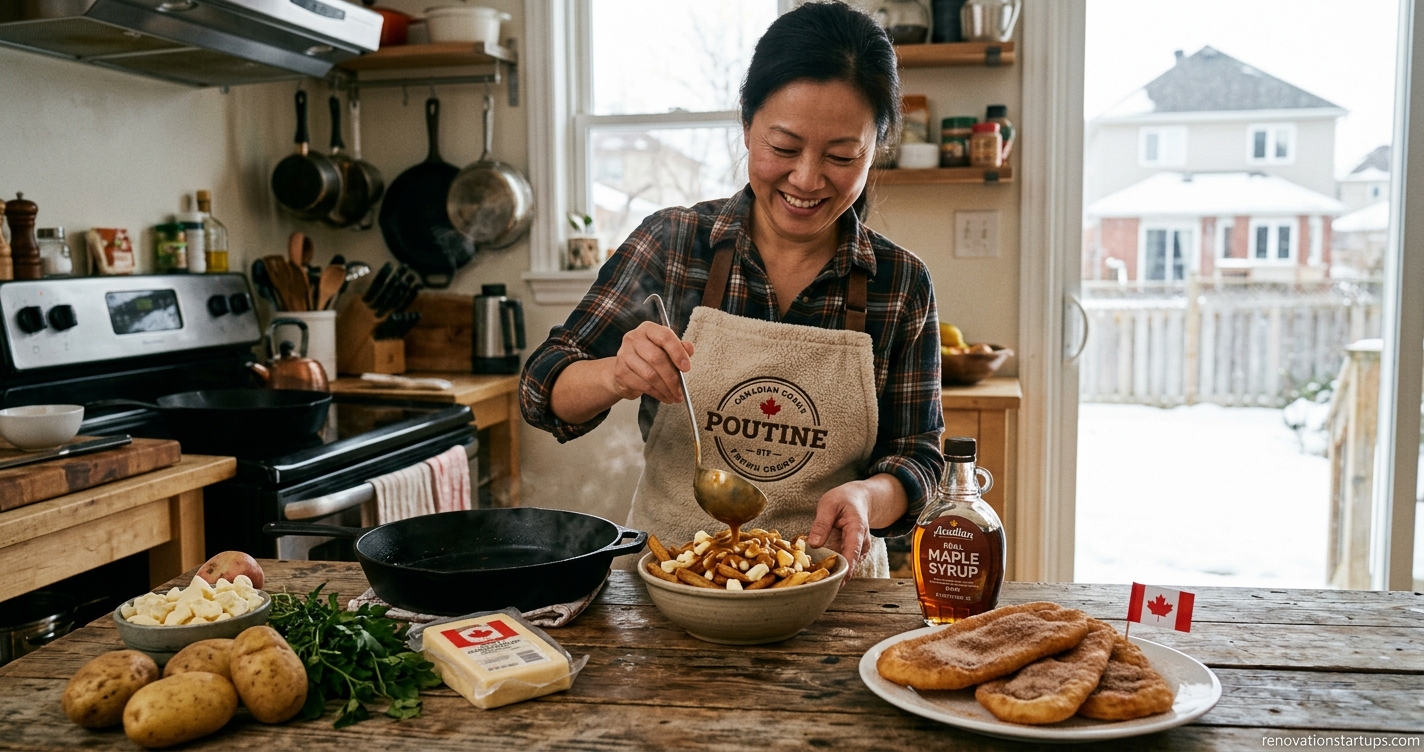
Canadian foods reflect a mix of Indigenous traditions, French and British settlement, and immigration from nearly every part of the world. The most recognized Canadian foods include poutine, butter tarts, tourtière, Nanaimo bars, and Montreal-style bagels, alongside regional specialties like Atlantic lobster rolls and prairie Saskatoon berry pie. There is no single official national dish, though poutine holds that title in most people’s minds.
What Are Canadian Foods?
Canadian foods are dishes and ingredients tied to the country’s history and geography rather than one unified cooking style. Canada spans six time zones, so what someone eats in Halifax looks nothing like what someone eats in Vancouver.
In our experience looking at regional menus across the country, the common thread isn’t a shared recipe book, it’s a shared reliance on local ingredients: cold-water seafood on the coasts, wheat and beef on the prairies, maple syrup wherever sugar maples grow. Immigration adds another layer entirely.
Toronto’s own tourism office has stated the city is home to restaurants representing over 200 ethnic origins, and Ontario’s broader food scene, from Caribbean patties to Ukrainian perogies, is a direct result of that. This is part of why the term resists a tidy, single definition, and why a proper answer usually starts with a region, not a recipe.
What Is Canada’s National Dish?
Poutine is widely treated as Canada’s national dish, though nothing has ever made that official. It started in rural Quebec in the late 1950s: crispy fries, fresh cheese curds, and hot gravy poured over top so the curds soften without fully melting.
A few Quebec towns still argue over which restaurant served it first, and that argument has never really been settled. What matters more is that poutine now appears everywhere from fast-food counters to fine dining rooms, usually priced somewhere between eight and eighteen dollars CAD depending on the toppings, with lobster or short rib versions pushing well past that in bigger cities.
Chain restaurants across the country now keep a poutine option on the menu year-round, which says something about how far the dish has travelled from its rural Quebec roots.
Which Dishes Show Up Most on “Must-Try” Lists?
Beyond poutine, a handful of dishes show up again and again on lists of Canadian foods worth trying.
Tourtière
A spiced meat pie, typically pork, beef, or veal, and a fixture on French-Canadian tables at Christmas. In Quebec’s Lac-Saint-Jean region, the filling sometimes swaps in wild game such as moose, and the pie itself is baked far deeper than the versions sold elsewhere.
Butter Tarts
A small pastry filled with butter, sugar, and egg, baked until the centre sets just short of runny. Whether raisins belong inside is a genuine, ongoing disagreement among Canadians, and bakeries in small Ontario towns still compete for local bragging rights over whose version sells out first each year.
Montreal-Style Bagels
Thinner and sweeter than a New York bagel, boiled in honey water, then baked in a wood-fired oven, which gives the crust a light char.
Nanaimo Bars
A no-bake dessert named after Nanaimo, British Columbia: a coconut-graham base, a custard buttercream centre, and a chocolate top layer.
Nova Scotia Lobster Rolls
Fresh lobster tossed with mayonnaise, chives, and lemon, served in a griddled bun. Prices shift with the catch, sometimes climbing past twenty-five dollars CAD per roll during peak tourist months.
What Foods Come From Indigenous Peoples in Canada?
Long before any of the dishes above existed, First Nations, Inuit, and Métis communities were already growing, hunting, and preserving food across the land now called Canada.
The Three Sisters, corn, beans, and squash, were planted together because each crop supports the other two: corn gives beans something to climb, beans return nitrogen to the soil, and squash leaves shade out weeds so the whole bed keeps moisture longer through dry stretches. Bannock, a simple pan-fried or baked bread, remains common in Indigenous communities nationwide and now turns up in bannock tacos at Indigenous-owned restaurants in cities like Winnipeg. Pemmican, a mix of dried pounded meat, fat, and berries, kept travellers fed through winters long before refrigeration existed.
Maple syrup itself started as an Indigenous practice of tapping trees and boiling the sap, later adopted and commercialized by European settlers. A growing number of Indigenous chefs are now reworking these staples for modern menus, arguably the most interesting shift happening in the wider world of Canadian food right now.
How Does Canadian Food Differ by Region?
Geography decides the menu more than anything else when it comes to Canadian foods.
Atlantic Canada
Newfoundland, Nova Scotia, New Brunswick, and Prince Edward Island lean heavily on seafood: lobster, scallops, mussels, and cod. Newfoundland adds its own dishes, including Jiggs’ dinner, a boiled meal of salt beef and root vegetables, plus fried dough called toutons served with molasses.
Quebec
French-Canadian cooking dominates here: poutine, tourtière, pea soup, and maple syrup produced in such volume that Quebec supplies roughly seventy percent of the world’s supply.
The Prairies
Manitoba, Saskatchewan, and Alberta favour wheat, beef, and berries. Alberta beef carries its own reputation for quality, while Saskatchewan’s Saskatoon berries end up baked into the province’s signature pie, and Manitoba blends in Ukrainian and Mennonite dishes like perogies and borscht.
British Columbia
Pacific salmon and spot prawns lead the menu, alongside a large Asian food scene centred in Vancouver, home to some of the strongest dim sum outside of Asia itself. Richmond’s night market alone draws crowds every summer purely on the strength of its food stalls.
Is Canadian Food Healthy?
It depends entirely on what ends up on the plate. Canada’s food guide steers people toward vegetables, whole grains, and lean protein, treating richer items like poutine or butter tarts as occasional food rather than daily staples. Traditional Indigenous diets, built around fish, game, and the Three Sisters, are generally considered nutritionally solid, which is one reason there’s renewed interest in bringing those foods back into wider circulation, both on reserves and in urban restaurants.
Nobody should treat a beaver tail as health food, but then again, nobody treats a doughnut that way either, and both exist comfortably in the same national diet. The honest takeaway is that Canadian foods span the full range from lean, foraged, and traditional to fried, sugary, and occasional, exactly like most national cuisines do once you look past the highlight reel.
FAQ
What is the most famous Canadian food?
Poutine is the most internationally recognized of all Canadian foods, followed closely by maple syrup and butter tarts.
What do Canadians eat that Americans don’t?
Ketchup-flavoured potato chips, Nanaimo bars, and Montreal-style smoked meat are common across Canada but rarely found on American shelves or menus.
Is poutine only made in Quebec?
No. It started there in the late 1950s, but it’s sold nationwide now, with regional versions swapping in pulled pork, bacon, or even lobster.
What is a traditional Canadian Christmas food?
Tourtière is the closest thing to a standard, especially in Quebec, though roast turkey and butter tarts appear on tables across the rest of the country too.
