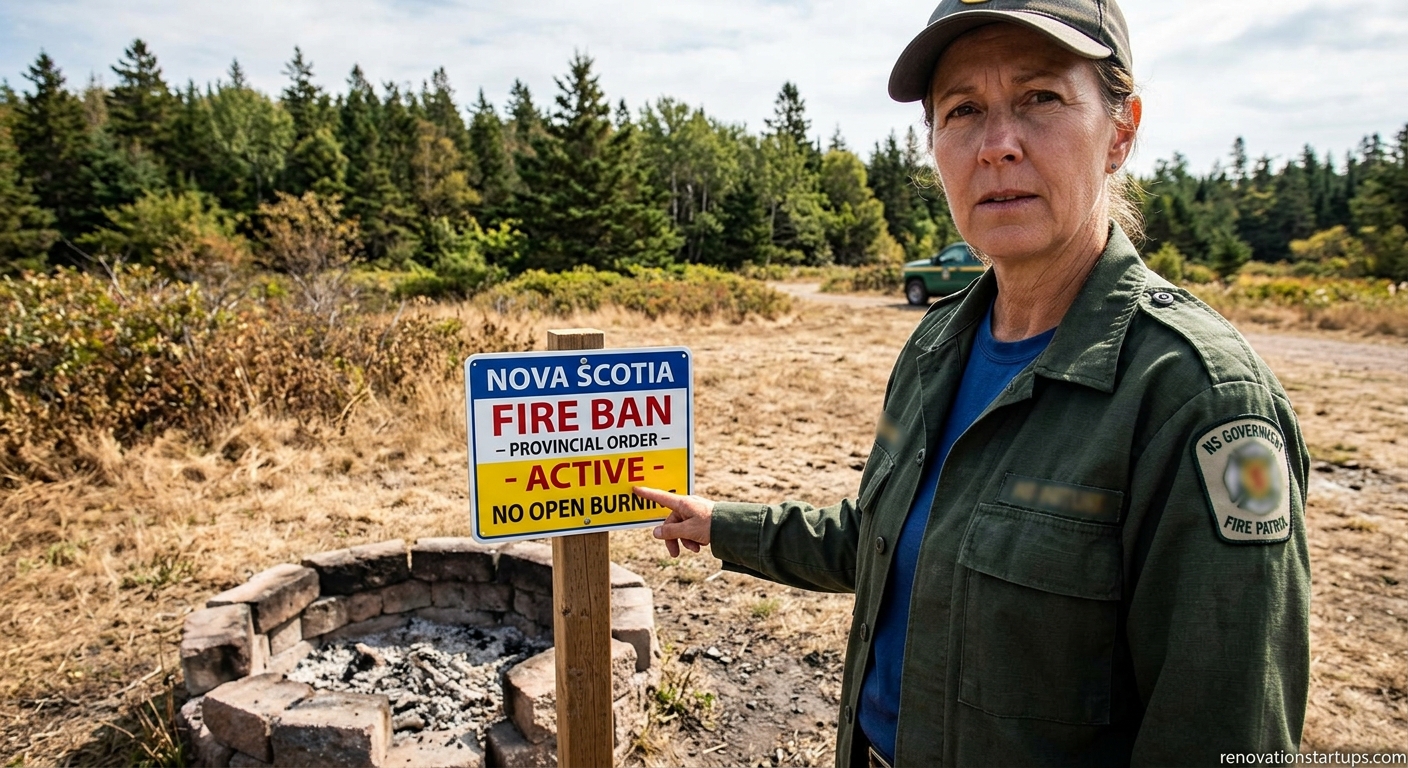
A fire ban NS order stops open wood fires in one or more counties or across the whole province. Without an order the daily burn restrictions still apply from 15 March to 15 October. No campfires or brush burning are allowed between 8 a.m. and 2 p.m. The provincial BurnSafe map shows the rules for the rest of the day after 2 p.m. You can also call 1-855-564-2876. A violation can cost $25,000 CAD.
What does a fire ban NS order actually cover?
Nova Scotia manages wildfire risk in three layers. Each one is stricter than the last.
Daily burn restrictions
These run every day of wildfire season. Staff collect hourly wind and rain readings along with temperature and humidity from weather stations. The numbers feed the Canadian Fire Weather Index System which rates the risk. The 8 a.m. to 2 p.m. block is never open because midday is often when risk peaks.
Full burn ban
When conditions turn dangerous the province can proclaim a ban on all open fires under the Forests Act. It may cover a single county or the whole province. The map stays red the entire time. Industrial burning permits are overridden as well.
Woods restrictions
This is the toughest tool. It limits travel and activity in wooded areas on Crown and private land. Landowners may use their own property but cannot host other people in the woods there. Forestry and mining work on Crown land is restricted too.
How do you check the burn map each day?
The BurnSafe map updates at 2 p.m. every day. Colours show what is allowed:
- Green means burning is allowed after 2 p.m.
- Yellow means burning is allowed after 7 p.m.
- Red means no burning that day
A red map at noon is normal. It reflects the standing morning rule and does not mean a fire ban NS proclamation is active. Bookmark the page on your phone. The 2 p.m. update is the time worth memorising because plans made at breakfast often change by afternoon. A recorded phone update is available at 1-855-564-2876. To report a wildfire or a violation call 1-800-565-2224 or 911. Municipal bylaws sit on top of provincial rules and can be stricter.
What counts as an open fire?
The rules cover any unenclosed fire that burns wood. That includes campfires and bonfires along with brush fires and chimenea fires. CSA-approved gas and charcoal barbecues are exempt when used as the manufacturer directs. So are propane fire bowls and patio heaters. Check the label before assuming a device is exempt. A steel ring holding logs is still an open wood fire. Sky lanterns are banned outright.
Domestic campfires and small brush piles need no permit. Paid burning and land clearing need an industrial permit. So does agricultural burning such as blueberry fields larger than two hectares.
Daily restrictions also apply in provincial and municipal campgrounds along with private ones. National parks fall under Parks Canada. Visitors from the United States follow the same rules as residents.
What are the fines for breaking burn rules?
Breaking a fire ban NS proclamation carries a $25,000 CAD fine. Ignoring the daily restrictions costs the same. In 2023 the province raised it from $237.50 after that year’s wildfires. That jump says a lot about how seriously officials now treat carelessness.
Fireworks count too. Consumer fireworks are prohibited wherever the map is red and the same $25,000 fine applies under the Fire Safety Act. The province repeated that reminder in July 2026.
Municipalities add their own layer. Halifax bylaw O-109 bans domestic brush burning and limits campfires to campgrounds. Permitted burning there runs from 2 p.m. to midnight. Tickets start at $410.
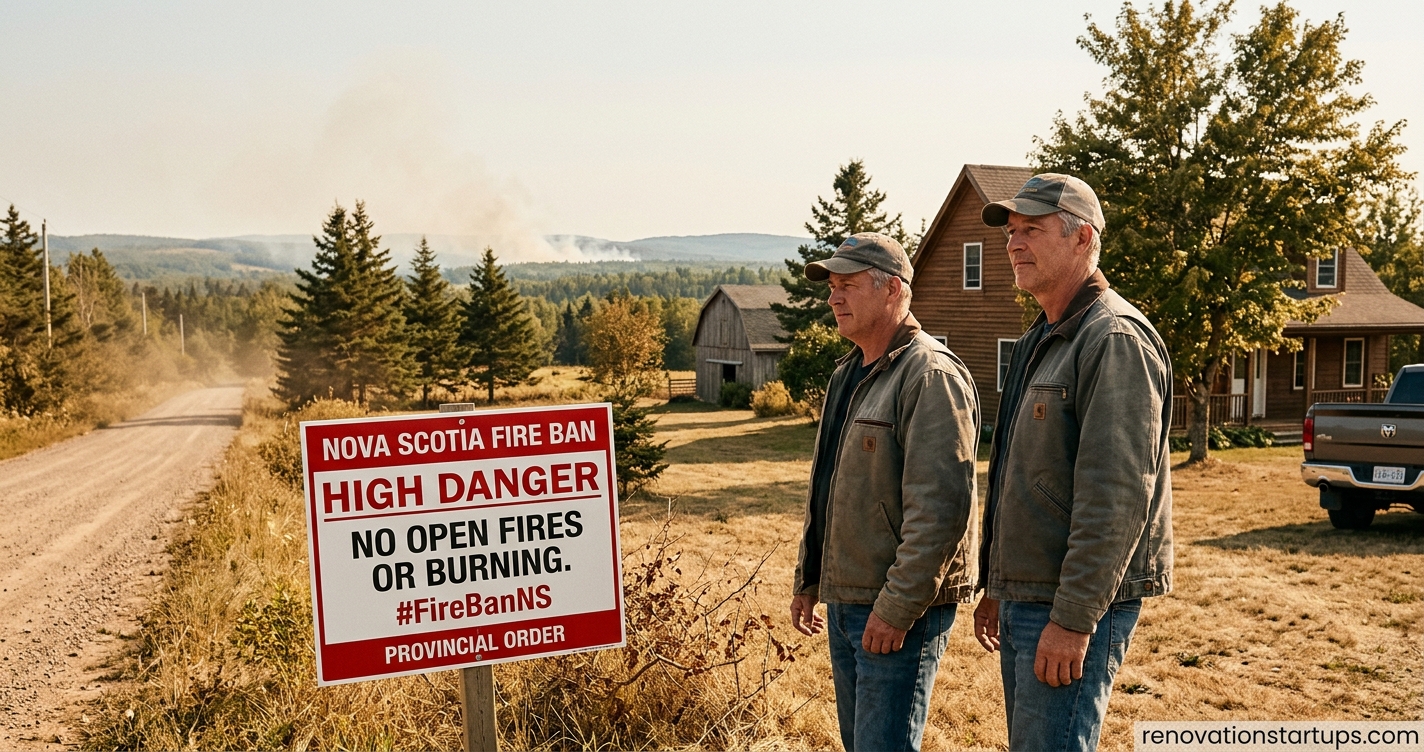
What happened during recent wildfire seasons?
2023
A Shelburne County fire became the largest in recorded provincial history. A second blaze near Upper Tantallon damaged or destroyed about 200 homes and other structures. A provincewide ban followed.
2025
A fire ban NS proclamation covered the entire province from 30 July. Woods restrictions came on 5 August. The ban lifted everywhere except Annapolis County on 26 September because of the Long Lake wildfire. The Natural Resources minister said the province had never seen fire activity so late in the season and extended the season to 31 October. Annapolis County’s bans ended on 15 October.
2026
By mid-July about 100 wildfires had been recorded. That was more than double the count at the same point the year before. The Mooseland Road fire in Halifax County reached an estimated 1,447 hectares. Between 100 and 150 people left their homes. Crews later brought it under control. Officials urged residents to check the BurnSafe map daily and to take care with cigarettes.
How does the province decide when to lift a ban?
Staff watch the same weather data used for the daily rules. Rain and cooler temperatures matter most. A fire ban NS proclamation is temporary by design and officials lift it in stages. In late August 2025 the premier announced that woods restrictions would ease where the fire index was no longer extreme and not expected to return there soon. Counties still at extreme risk stayed closed. The burn ban itself lifted about four weeks later. Residents often expect one clean end date. That rarely happens. Expect a patchwork first and check the map before every fire.
How do you build a campfire safely when burning is allowed?
Almost every wildfire in Nova Scotia starts with a person. That makes your habits the main defence.
Use a fire pit if one exists. Otherwise build on bare rock or soil. Scrape the ground down to bare earth in a one metre radius. Keep three metres of clearance around and above the fire. Aim for a fire smaller than half a metre high and wide because small hot fires are easier to cook over and to put out. Keep a bucket of water beside you. A water bottle will not do the job.
When a fire ban NS proclamation is active skip the wood fire entirely. A propane fire bowl gives you the glow without the risk. Cigarette butts start fires too. Crush them out fully and never toss them from a vehicle.
FAQ
Is there a burn ban in Nova Scotia today?
Open the BurnSafe map and look at your county. Daily restrictions apply until wildfire season ends. A full ban shows red for the entire day. Any changes appear in provincial news releases first. The NS Alert app also pushes emergency notices straight to your phone.
Can you have a campfire during a burn ban in Nova Scotia?
Not a wood one. Gas appliances that meet CSA standards remain allowed. Charcoal barbecues are allowed as well. Follow the manufacturer’s instructions.
What time can you burn in Nova Scotia?
Green counties allow burning after 2 p.m. Yellow counties allow it after 7 p.m. Red counties allow none. Your municipality may narrow those hours further.
When does a fire ban NS order end?
A proclaimed ban ends when conditions improve and the province announces it. Wildfire season itself normally ends on 15 October. Officials extended it to 31 October in 2025.
